Evolving AI: Agentic Variation Operators (AVO) — How Machines Are Learning to Improve Themselves
Introduction
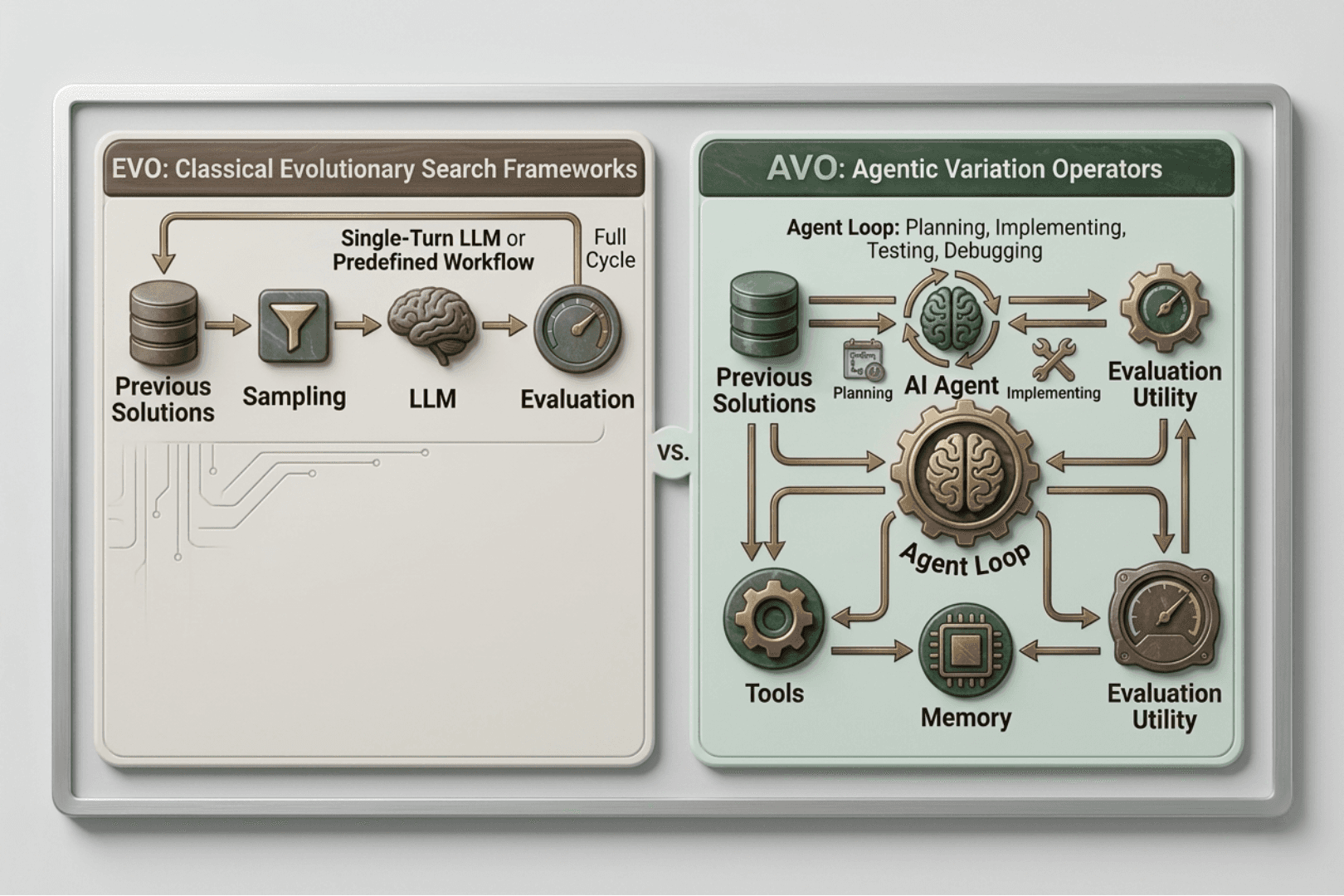
Have you ever wondered how artificial intelligence systems get better over time? A fascinating new approach called "Agentic Variation Operators" (AVO) is changing the way AI systems evolve and improve themselves. This breakthrough research, published by a team of scientists including Terry Chen and colleagues, introduces a method where AI agents actively participate in their own evolution process.
What is AVO?
Traditional AI improvement methods often require human experts to carefully design and test different versions of AI systems. It's like having a coach who needs to personally guide every step of an athlete's training. But with AVO, the AI becomes more like a self-coaching athlete who can identify weaknesses, create training plans, and evaluate progress independently.
AVO consolidates three key stages of AI evolution into a single autonomous process:
- Sampling - identifying what needs improvement
- Generation - creating new versions with potential improvements
- Evaluation - testing if the changes actually work better
How Does It Work?
Imagine an AI assistant that can recognize when it's struggling with certain tasks. Using AVO, this assistant can:
- Analyze its own performance to find weaknesses
- Create modified versions of itself designed to overcome these weaknesses
- Test these new versions to see if they actually perform better
- Keep the improvements that work and discard those that don't
This creates a continuous cycle of self-improvement without requiring constant human oversight. It's similar to how evolution works in nature, but with the AI actively directing its own evolutionary path rather than relying on random mutations.
Why This Matters
For everyday people, this research means future AI systems might:
- Adapt more quickly to your specific needs
- Improve themselves automatically when they encounter problems
- Require less human intervention to maintain and upgrade
- Develop more creative solutions to difficult problems
The researchers demonstrated that AVO-powered systems can achieve impressive results across various tasks, often matching or exceeding the performance of systems that required much more human guidance.
Looking Forward
While still in the research stage, AVO represents an important step toward more autonomous and adaptable AI systems. As this technology develops, we might see AI assistants that continuously improve based on their interactions with users, learning to better serve our needs without requiring frequent updates from developers.
This doesn't mean AI will become completely independent - human guidance remains important - but it does suggest a future where AI systems can take a more active role in their own development, making them more helpful partners in our increasingly digital world.