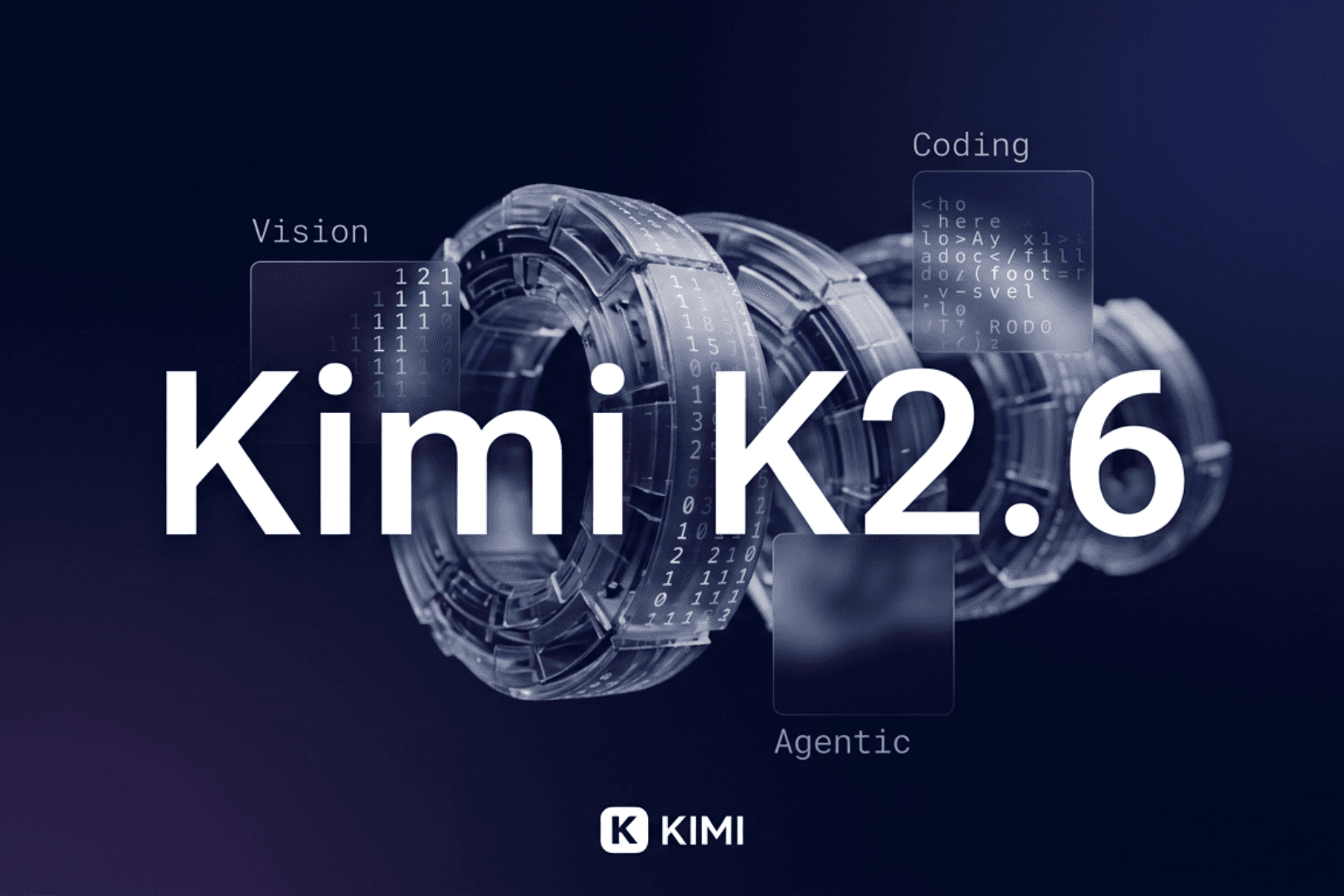
Kimi K2.6: The Next Evolution in AI Coding and Agent Intelligence
Published: April 21, 2026
The Dawn of a New Era in Open-Source AI
Moonshot AI has just dropped something remarkable into the AI landscape: Kimi K2.6, an open-source model that's making waves in the developer community. Released recently, this isn't just another incremental update—it's a significant leap forward in what open models can achieve, particularly in coding and agentic workflows.
What Makes K2.6 Special?
At its core, Kimi K2.6 represents a breakthrough in autonomous coding capabilities. The model demonstrated its prowess by autonomously overhauling exchange-core, an 8-year-old open-source financial matching engine, over a 13-hour execution period. This isn't just generating code snippets—this is sustained, intelligent software engineering at scale.
The model boasts an impressive 262,144-token context window for both input and output, giving it the capacity to handle massive codebases and complex reasoning tasks. With its Mixture-of-Experts architecture featuring 32 billion activated parameters and 1 trillion total parameters, K2.6 delivers state-of-the-art performance across multiple benchmarks.
How K2.6 Differs from K2.5
While K2.5 was already impressive with its 128K context window and strong general capabilities, K2.6 takes things to another level:
1. Enhanced Agentic Coding
K2.6 shows a "noticeable jump" in long-running testing tasks compared to its predecessor. The model excels at sustained coding workflows, making it ideal for real-world software development scenarios where tasks span hours, not minutes.
2. Superior Agent Planning and Tool Calling
The new version demonstrates significant improvements in agent planning and tool-calling capabilities. This makes it particularly valuable for builders working on autonomous agent systems—arriving at what some call "a convenient moment for agent builders."
3. Expanded Context Window
The leap from 128K to 262K tokens represents a doubling of context capacity, enabling K2.6 to handle even more complex, interconnected tasks without losing track of critical information.
4. Optimized for Real-World Applications
K2.6 has been specifically tuned for practical applications like building full-stack websites, managing massive tasks through Agent Swarm, and transforming documents into reusable skills.
Why This Matters
Kimi K2.6 arrives at a pivotal moment. It's open, it's strong on coding benchmarks, and it treats agentic workflows as first-class citizens. For developers tired of closed models or underwhelmed by other open alternatives, K2.6 offers a compelling option that doesn't compromise on capability.
The model's achievement with exchange-core isn't just a technical demo—it's a glimpse into a future where AI can handle substantial refactoring and maintenance work autonomously. This could fundamentally change how we approach legacy code modernization and large-scale software projects.
The Bottom Line
Kimi K2.6 isn't just an upgrade; it's a statement. Moonshot AI has shown that open-source models can compete at the highest levels of coding intelligence and autonomous operation. Whether you're building agents, refactoring codebases, or pushing the boundaries of what AI can do in software development, K2.6 deserves your attention.
The future of AI-assisted development is here, and it's remarkably open.