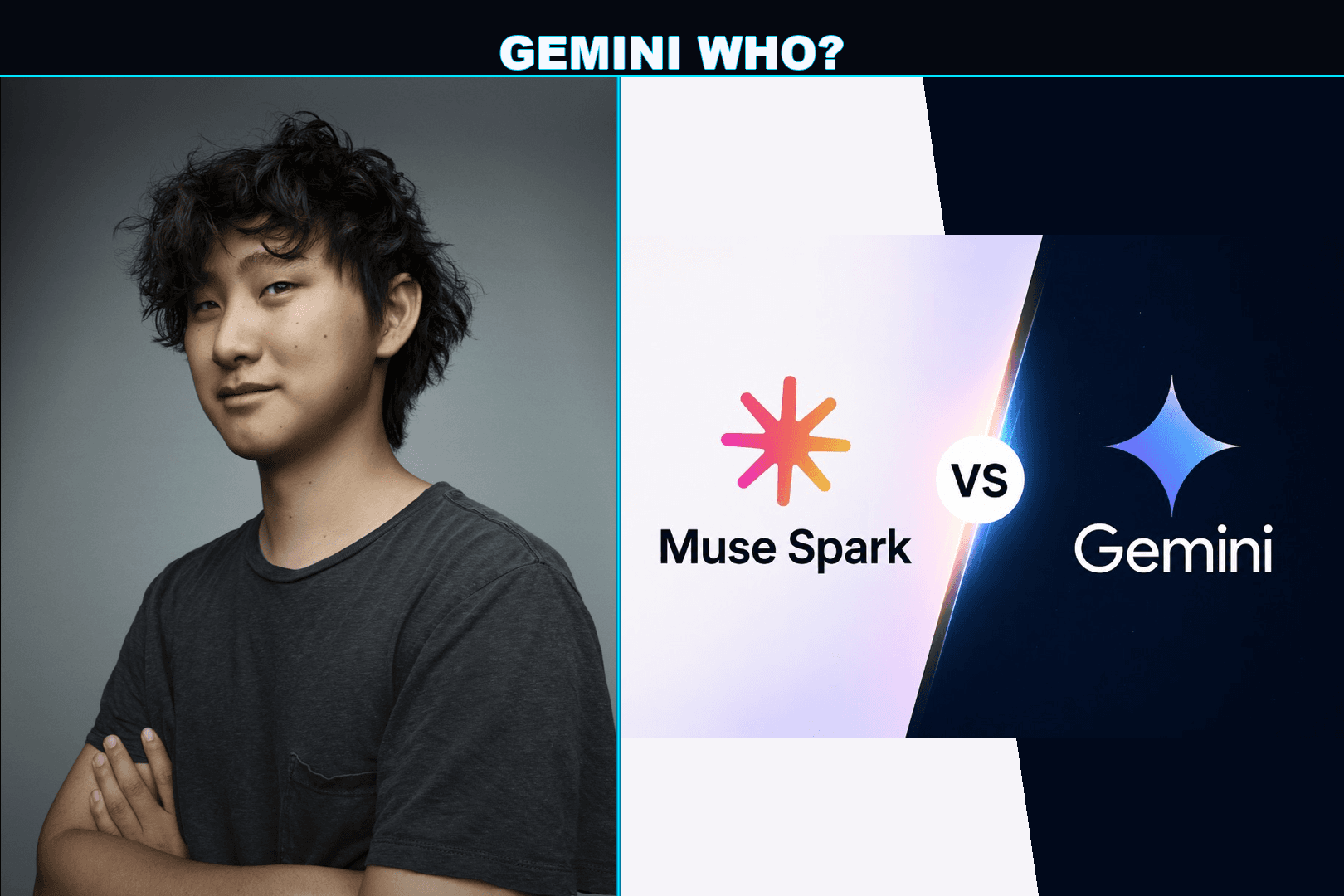
OpenAI's Navier–Stokes Claim and the Front-Running Academics Controversy
A claimed Millennium Prize breakthrough meets allegations of racing academic research—and questions about AI tools trained on private work
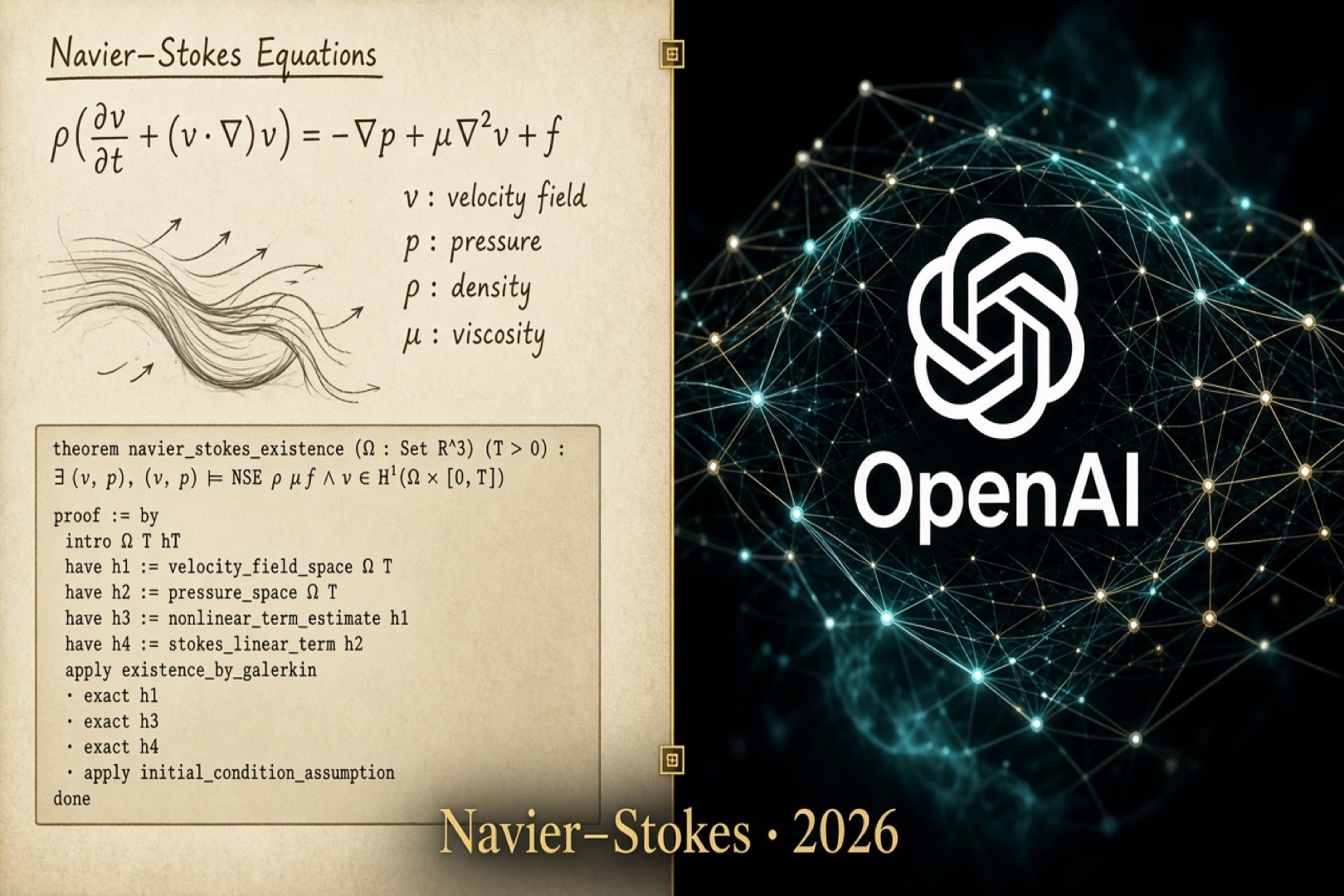
On September 8, 2026, OpenAI announced that an internal multi-agent system had produced a Lean-formalized proof of finite-time blowup for the Navier–Stokes equations—one of the Clay Mathematics Institute's seven Millennium Prize Problems. Hours earlier, New York University mathematician Tristan Buckmaster published a public statement describing concurrent work with Anthropic researcher Levent Alpöge and alleging that OpenAI raced their research path after learning of their progress. The dispute is not only about credit in pure mathematics. It also raises a sharper industry question: what happens when the same company sells AI research tools and competes to claim landmark scientific results?
What OpenAI Claims
In its official post, On the Navier–Stokes Millennium Prize Problem, OpenAI says an internal model significantly more capable than GPT-6 Astra coordinated on the order of 10,000 agents. The agents reportedly reached a resolution about 88 hours after launch; Lean formalization and verification took roughly 17 additional hours via GPT-6 Astra.
The claimed result: an initially smooth fluid at rest, under a smooth external force and with finite energy throughout, can develop a singularity in finite time. OpenAI says this establishes statements "C" and "D" in Charles Fefferman's official Clay formulation—i.e., a form of blowup rather than a proof that solutions always stay smooth.
OpenAI also describes solving an unforced Euler blowup question earlier in the run, then concentrating resources on Navier–Stokes. The company says it does not intend to claim the Clay $1 million prize, framing the release as evidence of AI capability progress. Coverage has cited enormous compute cost (on the order of tens of millions of dollars and hundreds of billions of tokens across the effort).
On concurrent academic work, OpenAI says its researchers and agents did not see Buckmaster and Alpöge's drafts before public release, that no specific user data was accessed to solve the problem, and that the proofs differ—especially on Euler (forced vs unforced). It also writes that it "cannot rule out" that de-identified data derived from product usage helped improve its models.
What Are the Navier–Stokes Equations—and Why Do They Matter?
The Navier–Stokes equations are the classical continuum description of how viscous fluids move—air around a wing, ocean currents, blood in arteries. Engineers use approximations of them every day. The Millennium Prize question is deeper and more mathematical: in three dimensions, starting from smooth data, do solutions always remain smooth for all time, or can the equations "blow up" (develop infinite velocities) in finite time?
Jean Leray proved weak solutions exist in 1934, but smoothness and uniqueness for the 3D incompressible case stayed open. In 2000, the Clay Mathematics Institute listed the problem among seven Millennium Prize Problems, each carrying a $1 million award. Progress here is widely viewed as a gateway to a rigorous theory of turbulence—one of the central open frontiers linking analysis, geometry, and mathematical physics.
| Aspect | Why it matters |
|---|---|
| Physical model | Governs continuum fluid motion used in weather, aerospace, and biomedical modeling |
| Mathematical open question | Smooth global existence vs finite-time singularity in 3D |
| Clay Millennium Prize | Official problem since 2000; $1M for a correct solution |
| Scientific stakes | A landmark for PDE theory and the mathematical foundations of turbulence |
Timeline of a Contested Week
| When | What happened |
|---|---|
| Aug 15, 2026 | Buckmaster & Alpöge report major progress: smooth-force blowup for Boussinesq and 3D incompressible Euler (building on earlier IPM work) |
| Sept 1 | OpenAI says it heard rumors of Millennium Prize resolutions and launched agent runs across open problems |
| Sept 5 | OpenAI says agents resolved forced Navier–Stokes blowup (~88 hours); Lean formalization followed |
| Sept 7–8 | Buckmaster/Alpöge release Lean-checked related results; Buckmaster posts statement; OpenAI publishes its claim |
Whose Claims—Side by Side
The controversy is best understood as competing accounts, not a settled verdict. Here is how the main parties frame the week.
Buckmaster & Alpöge
Year-long LLM-assisted program extending Córdoba & Martínez-Zoroa's forced-blowup approach to smooth forcing and Euler. Public Lean-checked results for IPM, Boussinesq, and 3D Euler; hypo-dissipative Navier–Stokes held back pending verification.
Allege OpenAI learned of their uncommon "smooth force" route, raced them, and—in Buckmaster's account—pressured dropping Alpöge (an Anthropic employee) from authorship proposals. They used OpenAI Codex extensively and raise concerns about product/training data exposure.
OpenAI
Independent agent effort after Sept 1 rumors; internal model stronger than GPT-6 Astra; claims forced Navier–Stokes blowup with Lean formalization; recognizes Buckmaster/Alpöge priority on forced Euler in its writeup.
Denies accessing their private drafts or user data for the proof. Calls some allegations false and inflammatory. Concedes de-identified product-usage data cannot be fully ruled out as a model-improvement factor.
Terence Tao
Praises Buckmaster–Alpöge as a remarkable achievement in the Córdoba–Martínez-Zoroa lineage and notes the route may extend toward Navier–Stokes. Separately warns that opaque, harness-style AI solutions risk converting a productive open problem into a viral benchmark with little reusable insight for the field.
Clay / community status
As of reporting, the Clay Institute still lists Navier–Stokes as open pending ordinary mathematical verification. OpenAI's full proof pipeline and development history remain contested territory for independent experts.
Credit Lineage: Córdoba and Martínez-Zoroa
Buckmaster stresses that the forced-blowup program was not invented by LLMs and not started by his collaboration. Credit for the basic idea, he writes, belongs to Diego Córdoba and Luis Martínez-Zoroa, who for years explored constructing blowups with (initially rougher) forcing. Buckmaster and Alpöge say they used large language models to push that program to smooth forcing and to incompressible Euler. Any fair account of the week has to start there—not only with lab announcements.
Private Research, Codex, and AI Vendor Risk
The most practically relevant thread for companies and researchers is not whether OpenAI "cheated"—a charge that remains disputed and unverified—but the structural conflict Buckmaster highlights: academics used OpenAI Codex as paying customers while OpenAI simultaneously raced toward the same scientific prize.
OpenAI denies reading their sessions for this project. It still acknowledges that de-identified usage signals may improve models. That gap—between "we did not open your draft" and "your usage may still shape the system that later competes with you"—is the privacy and IP story enterprises should track.
Opt-out is not enough
If training or telemetry defaults are unclear, sensitive research should assume vendor models may retain useful patterns—even without intentional draft theft.
Vendor as rival
Frontier labs sell tools and chase the same scientific and commercial milestones. That dual role creates priority risk for academics and product risk for startups.
Research hygiene
For unpublished breakthroughs, prefer local or contract-isolated tooling, clear data-retention terms, and staged disclosure before feeding full proofs into cloud agents.
What Remains Unresolved
Several technical distinctions still matter. Buckmaster and Alpöge publicly emphasize forced Euler and related models; OpenAI claims forced Navier–Stokes and separately unforced Euler. Those are related but not identical statements. Independent mathematicians still need time—and open materials—to audit OpenAI's Lean formalization and whether it matches Clay's prize criteria in the sense the community will accept.
Until that verification happens, the responsible headline is narrower than "math is solved." OpenAI has announced a claimed AI-produced resolution; Buckmaster has alleged front-running and credit pressure; Tao has warned about opaque AI science communication; and the Clay problem remains, for practical purposes, under community review. The lasting implication for readers outside pure math is clearer: when AI labs are both infrastructure providers and scientific competitors, private research workflows are part of the competitive surface—whether or not any single allegation is ultimately proven.
Stay in the loop
Keep up to date with the latest news and updates