China Blocks Meta's $2B Manus Acquisition: What It Means for Global AI Investment in 2026
Published: April 29, 2026
What Happened
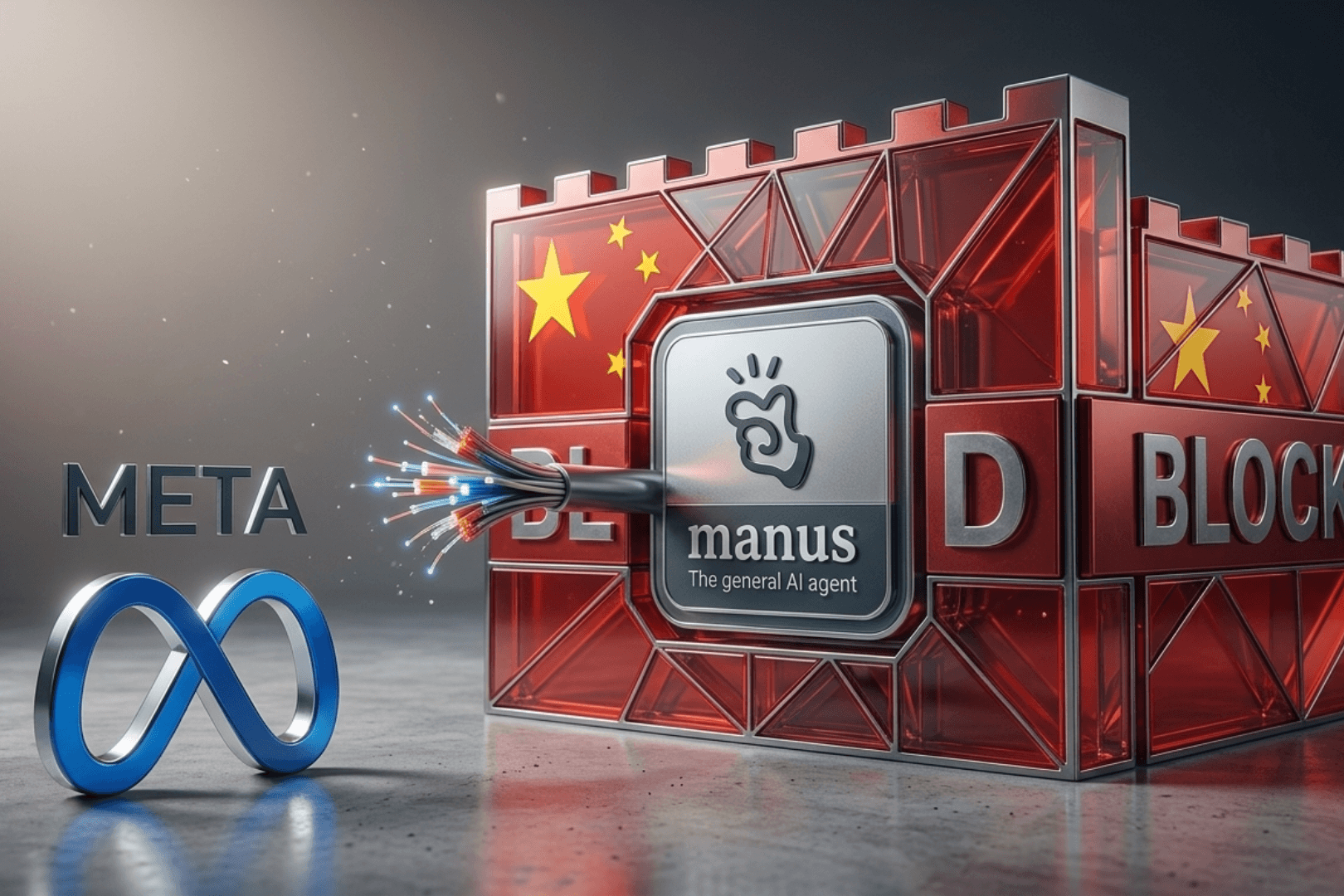
On April 27, 2026, China's National Development and Reform Commission (NDRC) blocked Meta's $2 billion acquisition of Manus, a Chinese-founded AI startup, and ordered the parties to unwind the deal. The decision came four months after the acquisition was announced in December 2025, after Meta had already integrated Manus into internal systems and onboarded its executives.
The case is unusually complex because Manus relocated its headquarters from Beijing to Singapore in mid-2025 before the Meta deal. Beijing looked through that offshore structure and asserted jurisdiction based on the technology's Chinese origin, talent base, and data foundations.
Manus first drew global attention in March 2025 when it launched a breakthrough AI agent capable of autonomously planning and executing complex tasks for users. Its rise began as a source of domestic pride, then turned politically sensitive after the relocation and sale.
Why It Happened
1. National Security and Tech Sovereignty
Beijing sees AI as strategically critical and is unwilling to lose key capabilities to the U.S. amid escalating tech rivalry. The core question is not legal domicile, but where the underlying data, people, and core technology came from. China appears to be applying a focused control model around high-value technologies such as AI and robotics.
2. "Singapore-Washing" Deterrence
Analysts describe this move as making an example of Manus to deter similarly structured offshore relocations by Chinese startups seeking U.S. capital and chips while reducing Chinese oversight. The forceful stance echoes prior high-profile interventions such as Ant Group's halted IPO and the Didi investigation.
3. Geopolitical Timing and Public Sentiment
The ruling came weeks before a planned Trump-Xi summit in Beijing and amid worsening U.S.-China tech decoupling. At the same time, public sentiment in China turned sharply negative after Manus moved to Singapore and sold to Meta, with accusations of betrayal. Chinese authorities also reportedly barred the two co-founders from leaving the country during the investigation.
Implications
For Chinese AI Startups
Founders face a structural bind: staying in China may limit access to U.S. capital and chips, while relocating can still trigger Chinese jurisdiction if strategic technology is involved. Analysts warn this could accelerate brain drain as talent incorporates overseas from day one.
For Cross-Border Tech Investment
The case sets a strong precedent for extraterritorial scrutiny over Chinese-origin strategic tech, even under offshore entities. That raises legal and execution risk for venture and M&A transactions, especially for companies based in neutral hubs like Singapore.
For U.S.-China Tech Decoupling
The decision narrows another channel for U.S.-China AI engagement and reinforces parallel technology spheres. Even academic cooperation is under pressure, as shown by the NeurIPS sanctions-related submission controversy and broader political backlash around cross-border AI dialogue.
Practical Complications
Unwinding the transaction is operationally difficult: Manus staff have already joined Meta, investors have been paid, and technology has been integrated. That creates a legal and technical quagmire without an obvious clean rollback path.
Meta says the transaction complied with applicable law and expects an appropriate resolution. Strategically, the block weakens Meta's immediate AI talent and capability gains in a fast-moving race with Google and OpenAI, though investor reaction has been relatively muted.