Hong Kong's 2026 Budget: What the AI Push Really Means for Workers and Businesses
Published: February 26, 2026
The Big Picture
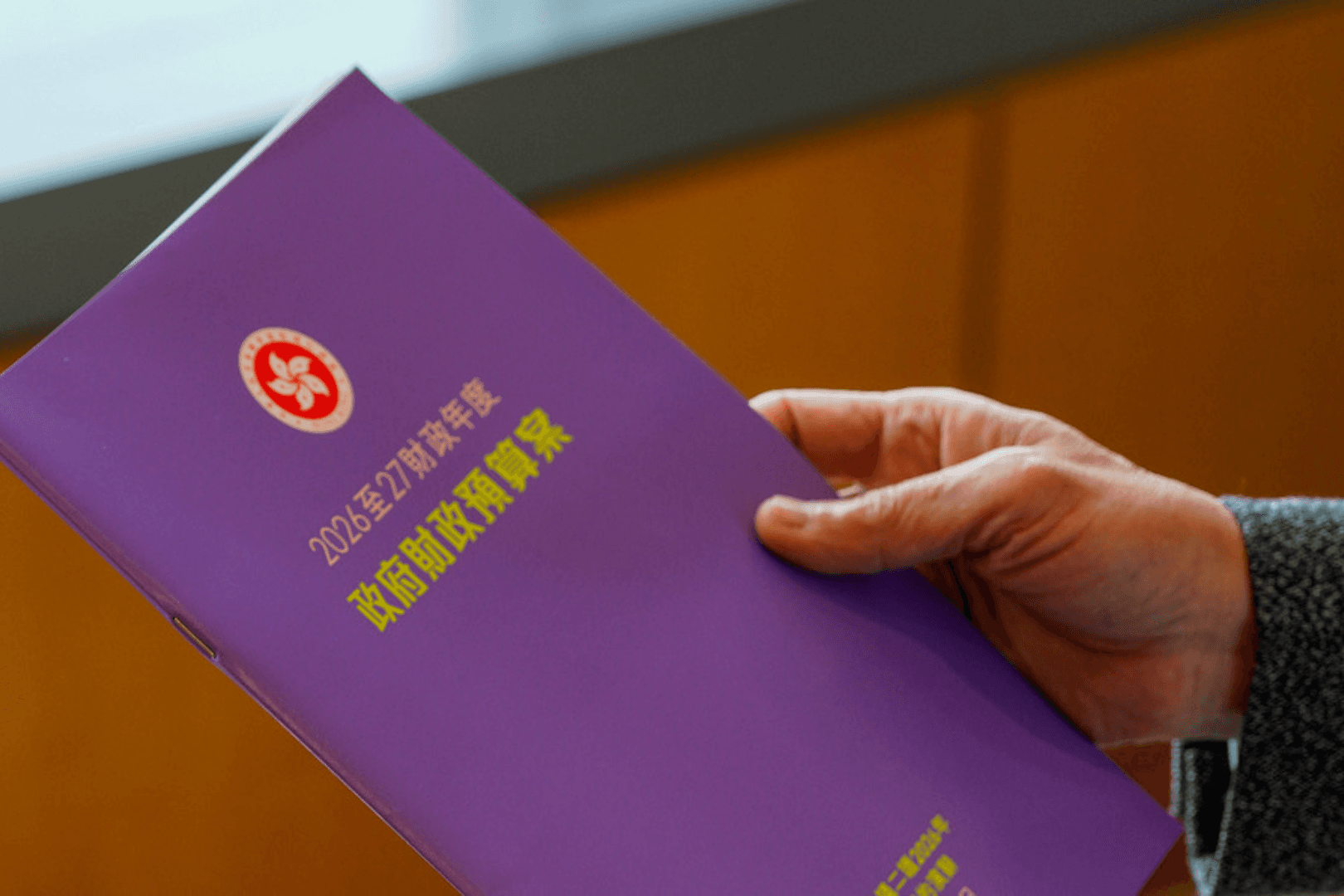
On February 25, 2026, Financial Secretary Paul Chan delivered Hong Kong's 2026–27 Budget under the theme "Driving High-Quality, Inclusive Growth with Innovation and Finance." Against a backdrop of unexpected fiscal improvement — a projected surplus of HK$2.9 billion instead of the feared HK$67 billion deficit — the government has seized the moment to make Artificial Intelligence the centrepiece of its economic strategy. [4]
This is not just another round of tech buzzwords. The budget signals a top-down, whole-of-society commitment to AI adoption, from primary school classrooms to factory floors. But what does it actually mean for everyday workers and small businesses? Let's break it down.
Three Pillars of Hong Kong's AI Strategy
1. A New High-Level AI Committee — Chaired by the Financial Secretary Himself
Paul Chan announced the formation of the Committee on AI+ and Industry Development Strategy, which he will personally chair. The committee will bring together experts, academics, enterprises, and industry park companies, with an initial focus on life and health technology and embodied AI (think robotics and physical AI systems). [1]
This is significant. Having the Financial Secretary at the helm signals that AI-driven industrial transformation is now a top government priority — not just an innovation sideshow.
2. Massive Computing Infrastructure
Hong Kong's overall computing power has reached 5,000 petaFLOPS, and the upcoming Sandy Ridge Data Facility Cluster — offering 250,000 square metres of gross floor area — will further supercharge this capacity. The tender result is expected to be announced shortly. [1]
Meanwhile, the government's HK$3 billion AI Subsidy Scheme has already approved around 30 R&D applications in areas including large language models, new materials, and biomedicine. [1]
3. Government Leading by Example
The government will allocate HK$100 million to introduce industry-leading technologies and accelerate the digital-intelligence transformation of public departments — walking the talk before asking the private sector to follow. [4]
What This Means for You: 4 Policies That Hit Close to Home
1. HK$50 Million for Community AI Learning
The government will allocate HK$50 million to invite public organisations to partner with technology companies and tertiary institutions to run AI application courses, seminars, and competitions targeting students, young people, and the general public. [1]
The goal is clear: raise baseline AI literacy across society. As one HKBU computer science professor noted, universities like HKBU have already made AI and data science core curriculum — and this budget funding will push that momentum into the community at large. [2]
However, educators caution that funding alone isn't enough. "Most professors still have a low acceptance of AI," said one HKBU lecturer. "It is necessary to fully implement AI training and education." The Hong Kong Federation of Education Workers has also called for more systematic teacher AI training programmes with dedicated subsidies. [2]
2. HK$2 Billion for Schools + 27 New University Programmes
The Quality Education Fund has earmarked HK$2 billion to advance digital education in primary and secondary schools, including school-based AI education programmes and AI training for teachers. [3]
At the university level, eight UGC-funded universities will launch 27 new undergraduate programmes in STEAM-related fields — including AI, creative industries, and data science — over the 2025/26 to 2027/28 triennium. AI-related programmes at self-financing post-secondary institutions will also be prioritised for inclusion in the Study Subsidy Scheme starting from the 2027/28 academic year. [1]
Notably, the University of Hong Kong and HKBU have already begun requiring undergraduates to complete AI literacy courses since September 2025 — a trend the budget now formalises and accelerates. [3]
3. The ERB Becomes "Upskill Hong Kong" — A Signal to Workers
The Employees Retraining Board (ERB) is being rebranded and upgraded as Upskill Hong Kong, shifting its mandate from retraining the unemployed to upskilling the currently employed. AI application will be a core component of its new course offerings. [1]
This rebranding is more than cosmetic. It reflects a government acknowledgement that the future of work is being reshaped by automation — a concern echoed globally. A World Economic Forum report projected that technology could displace 92 million jobs worldwide by 2030, and major tech companies including Microsoft and Amazon have already been cutting headcounts as they pivot toward AI-driven efficiency. [3]
For Hong Kong workers, the message is: don't wait to be displaced — upskill now, with government support.
4. Expanded Funding for SMEs and Manufacturers
- BUD Fund top-up: An additional HK$200 million injected into the BUD Dedicated Fund, with the per-company subsidy cap raised to HK$150,000, directly incentivising SMEs to adopt AI consulting and automation solutions.
- Manufacturing Upgrade Pilot Scheme: A new scheme offering up to HK$250,000 per enterprise on a 1:2 matching basis to support production line upgrades.
- IP Tax Deduction Review: The government will review tax deduction arrangements for the acquisition of intellectual property usage rights, reducing the cost burden for businesses bringing in advanced technologies. [1]
The Bigger Context: Why Now?
Hong Kong's 2026 budget arrives at a pivotal moment. The city's economy grew 3.5% in 2025 and is forecast to expand 2.5%–3.5% in 2026. [4] With public finances in better shape than expected, the government has the fiscal headroom to invest boldly.
Globally, the race to embed AI into every layer of the economy is accelerating. Hong Kong's strategy — combining infrastructure investment, workforce development, SME support, and top-level governance — is a coherent attempt to ensure the city doesn't get left behind.
The question now is execution. Funding is a start. But turning Hong Kong into a genuinely AI-fluent society will require sustained effort from educators, employers, and individuals alike.
Key Numbers at a Glance
| Initiative | Amount |
|---|---|
| Community AI Learning Courses | HK$50 million |
| Digital Education (Schools) | HK$2 billion |
| AI Subsidy Scheme (R&D) | HK$3 billion |
| Government Digitalisation | HK$100 million |
| BUD Fund Top-up | HK$200 million |
| Manufacturing Upgrade Pilot | Up to HK$250,000 per enterprise |
| BUD Fund Per-Company Cap | HK$150,000 |
Sources
- [1] Hong Kong 2026-27 Budget Speech — budget.gov.hk
- [2] Budget 2026: HK$50 million for Hongkongers to receive AI training — HKBU The Young Reporter
- [3] Hong Kong Pledges $6.4 Million to Expand AI Training Across City — Caixin Global
- [4] Hong Kong 2026-27 Budget: Driving High-Quality Growth — Yahoo Finance / Newsfile