Moonshot AI Unveils Kimi K2.5: The Next Generation of Visual Agentic Intelligence
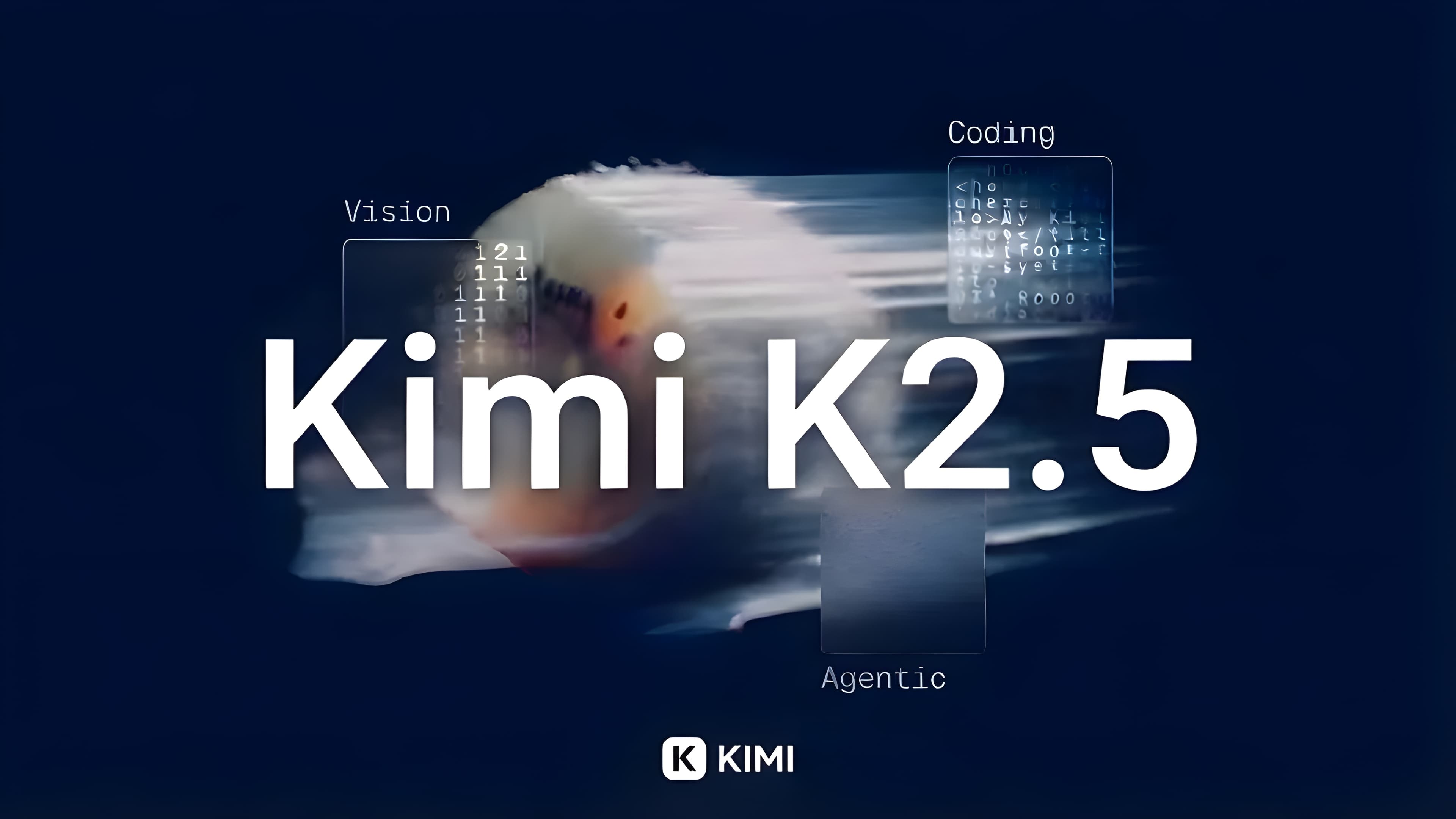
Chinese AI startup Moonshot AI has made waves in the artificial intelligence community with the release of Kimi K2.5, a groundbreaking open-source model that the company positions as "Visual Agentic Intelligence." Released on January 26, 2026, this latest iteration represents a significant leap forward in AI capabilities, combining native multimodal understanding with an innovative agent swarm architecture that can coordinate up to 100 sub-agents simultaneously.
About Moonshot AI
Moonshot AI, known in Chinese as "月之暗面" (Moon's Dark Side), was founded in Beijing in 2023 with a clear mission: developing "AI that can actually get work done." The company quickly gained recognition with the launch of its Kimi chatbot in 2023, and has continued to push boundaries in AI development. Just last year, the company open-sourced its Kimi K2 model, setting the stage for this latest release.
Revolutionary Agent Swarm Technology
Dynamic Sub-Agent Generation
The most distinctive feature of Kimi K2.5 is its "Agent Swarm" capability, which fundamentally changes how AI models approach complex tasks. When faced with sophisticated problems, K2.5 can autonomously decompose the challenge and dynamically generate up to 100 sub-agents that work in parallel. These agents can execute diverse functions including:
Agent Swarm Capabilities
- • Web searching and information gathering
- • Code writing and debugging
- • Data organization and analysis
- • Verification and validation tasks
Unprecedented Coordination
The system can coordinate up to 1,500 tool calls across its agent swarm, with the entire network being automatically created and scheduled by the model itself—no pre-defined roles or manual workflow design required. This represents a paradigm shift from traditional single-agent approaches, with Moonshot AI claiming execution time reductions of up to 4.5x compared to single-agent models.
Native Multimodal Capabilities
Built from the Ground Up
Unlike many AI models that bolt on visual capabilities as an afterthought, Kimi K2.5 was designed with native multimodal architecture from inception. The model underwent continual pre-training on approximately 15 trillion tokens of mixed text and visual data. This approach ensures that visual and textual understanding aren't competing capabilities but rather complementary strengths that improve simultaneously.
Comprehensive Understanding
K2.5 can seamlessly process and understand:
- • Text documents and natural language
- • Static images and photographs
- • Video content
- • Cross-modal reasoning tasks
According to Moonshot AI, at sufficient scale, visual and text capabilities no longer require trade-offs but can advance together, providing a stable foundation for real-world applications.
Advanced Coding and Visual Programming
Frontend Generation from Natural Language
One of K2.5's most impressive capabilities is its ability to generate complete frontend interfaces directly from natural language instructions. The model can create:
- • Interactive layouts and user interfaces
- • Animation effects and transitions
- • Responsive design elements
Visual Debugging
Beyond just code generation, K2.5 can perform code generation and visual debugging through images or videos, making it a powerful tool for developers working on visual applications.
Performance and Benchmarks
Agentic Task Excellence
Kimi K2.5 demonstrates strong performance across multiple agentic benchmarks, including HLE, BrowseComp, and SWE-Verified, delivering competitive results at a fraction of the cost of proprietary alternatives. Performance improvements over K2 include:
Performance Improvements
Agent Tasks
12-18% improvements on agent tasks compared to K2
Coding Benchmarks
8-15% gains on coding benchmarks
Visual Understanding
State-of-the-art results in visual understanding tasks
Testing Specifications
All K2.5 experiments were conducted with standardized parameters:
- • Temperature: 1.0
- • Top-p: 0.95
- • Context length: 256k tokens
Availability and Access
Multiple Access Points
Kimi K2.5 is available through several channels:
Kimi.com and Kimi App
Four operational modes are available:
- • K2.5 Instant
- • K2.5 Thinking
- • K2.5 Agent
- • K2.5 Agent Swarm (beta, premium users only)
API Access
Developers can integrate K2.5 into their applications via API
Kimi Code
A dedicated coding environment
Open Source
Researchers and developers can download model weights and configurations from Hugging Face
Current Limitations
The Agent Swarm functionality remains in a testing phase and is currently restricted to premium paid users, reflecting the experimental nature of this cutting-edge capability.
Technical Architecture
Continual Pre-training Approach
Kimi K2.5 builds upon the foundation of Kimi K2, utilizing continual pre-training methodology enhanced with approximately 15 trillion mixed visual and textual tokens. This approach allowed Moonshot AI to preserve the strengths of K2 while dramatically expanding the model's multimodal and agentic capabilities.
Self-Directed Coordination
The agent swarm paradigm represents a shift from single-agent scaling to self-directed, coordinated swarm-like execution. This architecture enables the model to tackle complex, multi-step tasks that would overwhelm traditional single-agent systems.
Industry Impact and Significance
Open Source Commitment
By releasing K2.5 as an open-source model, Moonshot AI is contributing to the democratization of advanced AI capabilities. This move allows researchers, developers, and organizations worldwide to experiment with and build upon state-of-the-art agentic AI technology.
Competitive Positioning
Moonshot AI claims that Kimi K2.5 is "one of the most capable open-source models currently available," positioning it as a serious competitor to proprietary models from major tech companies. The combination of native multimodality, agent swarm capabilities, and strong benchmark performance supports this assertion.
Cost Efficiency
The model's ability to deliver strong performance at a fraction of the cost of competing solutions makes it particularly attractive for organizations looking to deploy advanced AI capabilities without breaking the budget.
Future Implications
The release of Kimi K2.5 signals several important trends in AI development:
Agent-Based Architectures
The success of the agent swarm approach may inspire similar architectures in future models, moving beyond single-agent paradigms.
Native Multimodality
K2.5 demonstrates that building multimodal capabilities from the ground up yields better results than retrofitting them onto text-only models.
Open Source Innovation
Moonshot AI's commitment to open-sourcing advanced models continues to push the entire industry forward by enabling broader experimentation and innovation.
Practical AI
The focus on "AI that can actually get work done" reflects a maturation of the field, moving from impressive demos to genuinely useful tools.
Conclusion
Kimi K2.5 represents a significant milestone in the evolution of artificial intelligence, combining native multimodal understanding with innovative agent swarm technology to tackle complex, real-world tasks. With its open-source availability, strong benchmark performance, and unique architectural innovations, K2.5 is poised to make a substantial impact on both research and practical AI applications.
As the Agent Swarm feature moves from beta to general availability and developers worldwide begin experimenting with the model's capabilities, we can expect to see novel applications and use cases emerge. Moonshot AI has not only delivered a powerful new model but has also opened up new possibilities for how we think about AI architecture and task execution.
For researchers, developers, and organizations interested in cutting-edge AI capabilities, Kimi K2.5 offers an exciting opportunity to explore the future of visual agentic intelligence—today.
Ready to Explore Advanced AI Capabilities?
Implementing cutting-edge AI models and agentic intelligence systems requires careful planning, technical expertise, and strategic guidance. Whether you're exploring visual AI, building agent swarms, or deploying multimodal AI solutions, having expert support can accelerate your journey and ensure successful implementation.