NVIDIA RTX Spark: The Superchip That Wants to Reinvent Your PC
The AI Agent Era Has Arrived — And It Fits in Your Laptop Bag
Published: June 2, 2026
A New Chapter for the Personal Computer
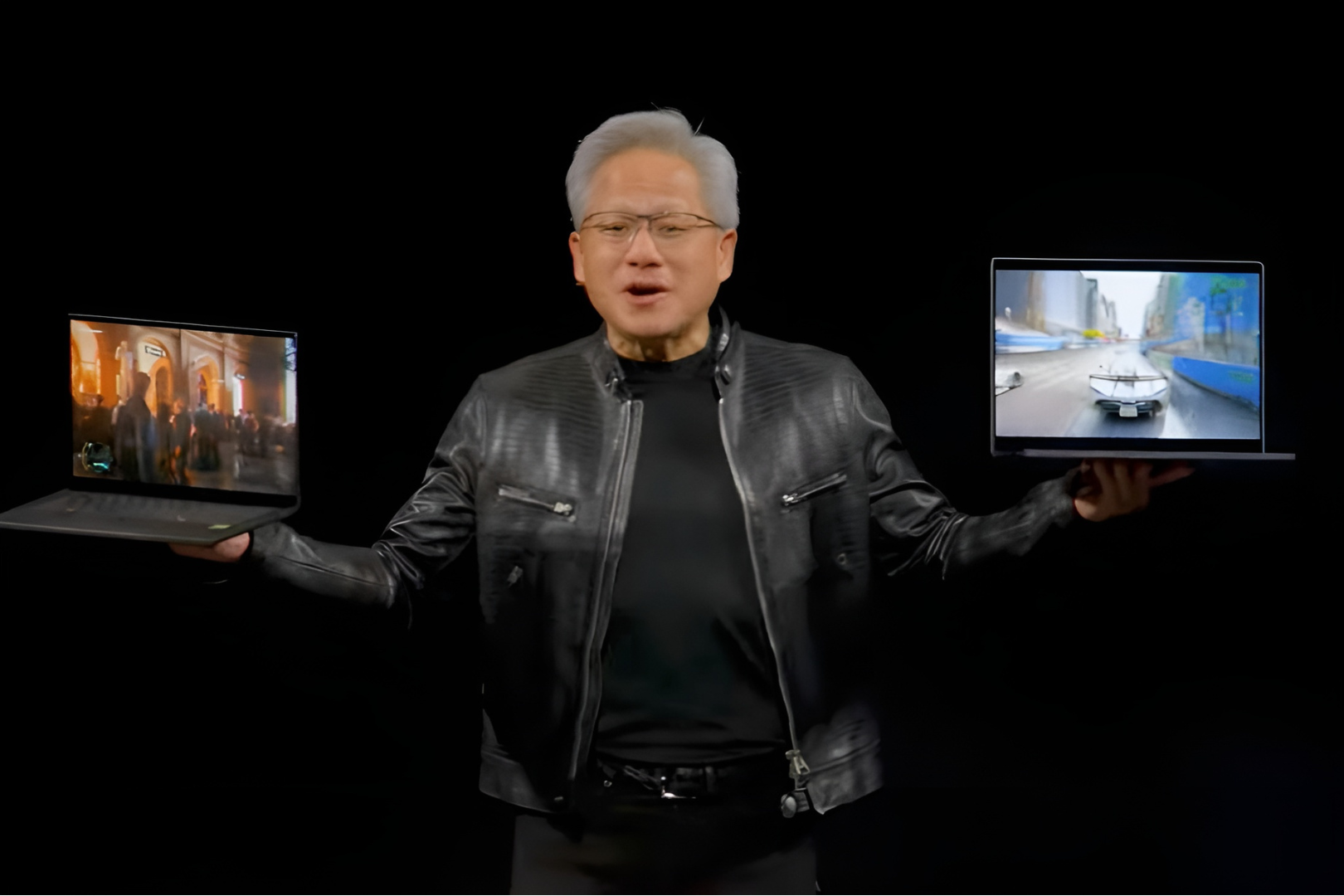
Forty years into the PC revolution, NVIDIA just fired a shot that could reshape the entire industry. At Computex 2026, CEO Jensen Huang took the stage and unveiled the NVIDIA RTX Spark — a superchip he describes as the culmination of 33 years of NVIDIA engineering. This isn't just a new GPU. It's a full platform rethink, built from the ground up for one purpose: to turn your Windows PC into a personal AI supercomputer.
The announcement signals NVIDIA's boldest move yet — stepping out of the GPU add-in card business and into the heart of the PC itself, taking on Intel and AMD on their own turf for the very first time.
What Exactly Is RTX Spark?
The RTX Spark is a superchip — meaning it fuses two distinct chiplets into one unified package using TSMC's cutting-edge 3nm process, cramming a staggering 70 billion transistors onto a single die.
The two halves of this powerhouse are:
- NVIDIA Blackwell RTX GPU — featuring 6,144 CUDA cores and 5th-generation Tensor Cores with FP4 precision for blazing AI inference
- NVIDIA Grace CPU — a high-performance 20-core ARM-based processor, connected to the GPU via NVIDIA's ultra-fast NVLink-C2C chip-to-chip interconnect
The result? Up to 1 petaflop of AI compute and a jaw-dropping 128GB of unified memory — a spec more commonly seen in workstation servers than slim consumer laptops. For context, that's comparable to the memory capacity of many cloud AI inference nodes, now sitting right in your bag.
The Big Idea: From Tool to Teammate
Jensen Huang's keynote wasn't just a hardware reveal — it was a philosophical manifesto. His core argument: the operating system is about to undergo its most radical transformation since Windows 95.
Huang argued that in the past, the OS powered the PC revolution — but in the future, the OS will integrate large language models, becoming the modern-day DirectX. NVIDIA and Microsoft have reportedly been working in secret for three years to build this vision. The result is a new Agentic Runtime environment baked into Windows, where traditional apps are gradually replaced by AI Agents — autonomous programs that can:
- See, hear, and speak on your behalf
- Run securely in local sandboxes
- Connect to cloud models on demand
- Handle research, document management, coding, and creative tasks autonomously
This is the "personal AI computer" — a machine that doesn't just respond to commands, but proactively works for you. NVIDIA and Microsoft are also partnering on NVIDIA OpenShell, a new OS security primitive designed to make on-device agent execution safe and trustworthy.
Hardware: Slim, Light, and Surprisingly Powerful
RTX Spark isn't just about raw AI muscle. NVIDIA has engineered the platform for real-world portability, debuting a new Peak Efficiency Max-Q design philosophy that pushes the boundaries of what a thin laptop can do.
Key hardware highlights:
| Feature | Spec |
|---|---|
| Thickness | As slim as 14mm |
| Weight | As light as 3 lbs |
| Display | Tandem OLED with G-SYNC |
| Laptop Sizes | 14" to 16" |
| Memory | Up to 128GB unified |
| AI Compute | Up to 1 Petaflop |
| CPU | 20-core NVIDIA Grace (ARM) |
| GPU | Blackwell RTX, 6,144 CUDA cores |
| Manufacturing | TSMC 3nm |
RTX Spark will power both slim laptops and compact desktop mini PCs, with over 30 laptop designs and 10 desktop designs already confirmed for a Fall 2026 launch. Manufacturers on board include ASUS, Dell, HP, Lenovo, Microsoft Surface, MSI, with Acer and GIGABYTE to follow.
Not Just AI — Gaming and Creativity Too
One thing NVIDIA is keen to stress: RTX Spark isn't a niche AI box. It runs the full NVIDIA software stack — 100% of it — meaning it's equally at home rendering AAA games like Forza and the newly announced 007 game, running complex simulations in digital biology or astrophysics, or powering creative tools like Adobe and Blender (both of which are being rebuilt specifically for RTX Spark).
On the gaming front, NVIDIA also announced DLSS 4.5 Ray Reconstruction, arriving in August 2026. The new model delivers:
- 35% more compute capability
- 20% more parameters processed
- Improved lighting accuracy and temporal stability in ray-traced/path-traced games
- Coming to Blender 5.3 in Fall 2026
Over 1,000 RTX-enhanced games and apps are now available, with 11 more titles adding DLSS 4.5 support including Marvel Rivals, Phantom Blade Zero, and Gothic 1 Remake.
Why This Matters: NVIDIA's Biggest Gamble
For decades, NVIDIA has been a component company — you bought their GPU, but Intel or AMD still owned the CPU. RTX Spark changes that entirely. This is the first time NVIDIA has designed a complete Windows PC platform around its own silicon, end-to-end.
The competitive implications are enormous. Apple proved with its M-series chips that a unified memory architecture with tightly integrated CPU+GPU can leapfrog traditional PC designs in efficiency and performance. NVIDIA is now making the same bet — but with an AI-first twist that Apple hasn't yet matched at this scale.
Whether RTX Spark becomes the new standard or remains a premium niche product will depend on software adoption, pricing, and how quickly the "AI Agent" paradigm resonates with everyday users. But one thing is clear: the PC is changing, and NVIDIA intends to lead that change.
Quick Verdict
- Revolutionary concept — the most ambitious PC platform announcement in years
- Stunning specs — 128GB unified memory and 1 petaflop AI in a 14mm chassis
- Strong ecosystem — Microsoft, Adobe, Blender, and major OEMs all on board
- Watch this space — pricing and real-world performance TBD at Fall 2026 launch
Ready to Build Agentic AI on Your Stack?
RTX Spark signals a future where Windows PCs run AI agents locally — but turning that vision into production systems takes the right architecture, security model, and deployment strategy. Whether you're evaluating on-device AI, building agentic workflows, or planning enterprise AI infrastructure, expert guidance can help you move from announcement to impact.