OpenAI's GPT-5.6 & Jalapeño Chip: Everything You Need to Know About the AI Giant's Biggest Week Ever (2026)
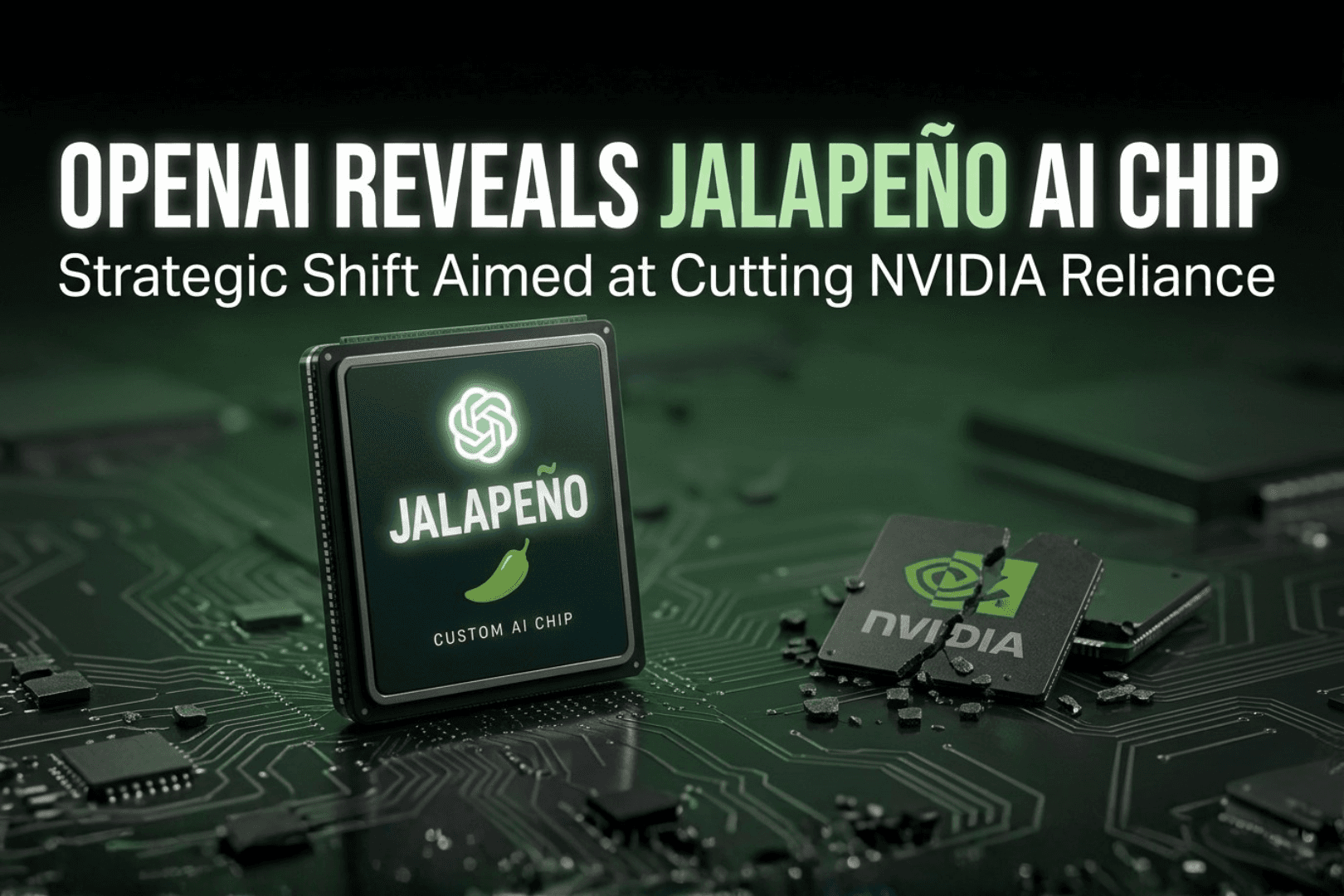
TL;DR: In a single week, OpenAI unveiled its most powerful AI model family — GPT-5.6 (Sol, Terra, Luna) — AND its first-ever custom AI chip, Jalapeño, co-designed with Broadcom. Here's everything you need to know.
Introduction: OpenAI's Most Consequential Week
The last week of June 2026 will go down as one of the most pivotal moments in AI history. OpenAI dropped two landmark announcements back-to-back:
- June 24 — The unveiling of Jalapeño, OpenAI's first custom AI inference chip, co-designed with Broadcom
- June 26 — The preview launch of GPT-5.6, a three-tier next-generation model family named Sol, Terra, and Luna
Together, these two announcements signal that OpenAI is no longer just a model company — it is rapidly becoming a full-stack AI powerhouse, controlling everything from silicon to software.
The Jalapeño Chip — OpenAI's First Custom Silicon
What Is the Jalapeño Chip?
Jalapeño is OpenAI's debut custom AI inference chip, co-designed with semiconductor giant Broadcom and manufactured by TSMC in Taiwan. Officially unveiled on June 24, 2026, it marks OpenAI's first major step into owning its own hardware stack.
OpenAI and Broadcom describe Jalapeño as an "Intelligence Processor" — the first AI accelerator in a platform they are building "to make advanced AI faster, more reliable, and more accessible to more people."
At the unveiling, Broadcom's Hock Tan and Charlie Kawwas personally presented the first Jalapeño chip to OpenAI's Sam Altman and Greg Brockman — a symbolic handoff that underscores OpenAI's push to control more of the AI stack, from custom silicon through to the products users touch every day.
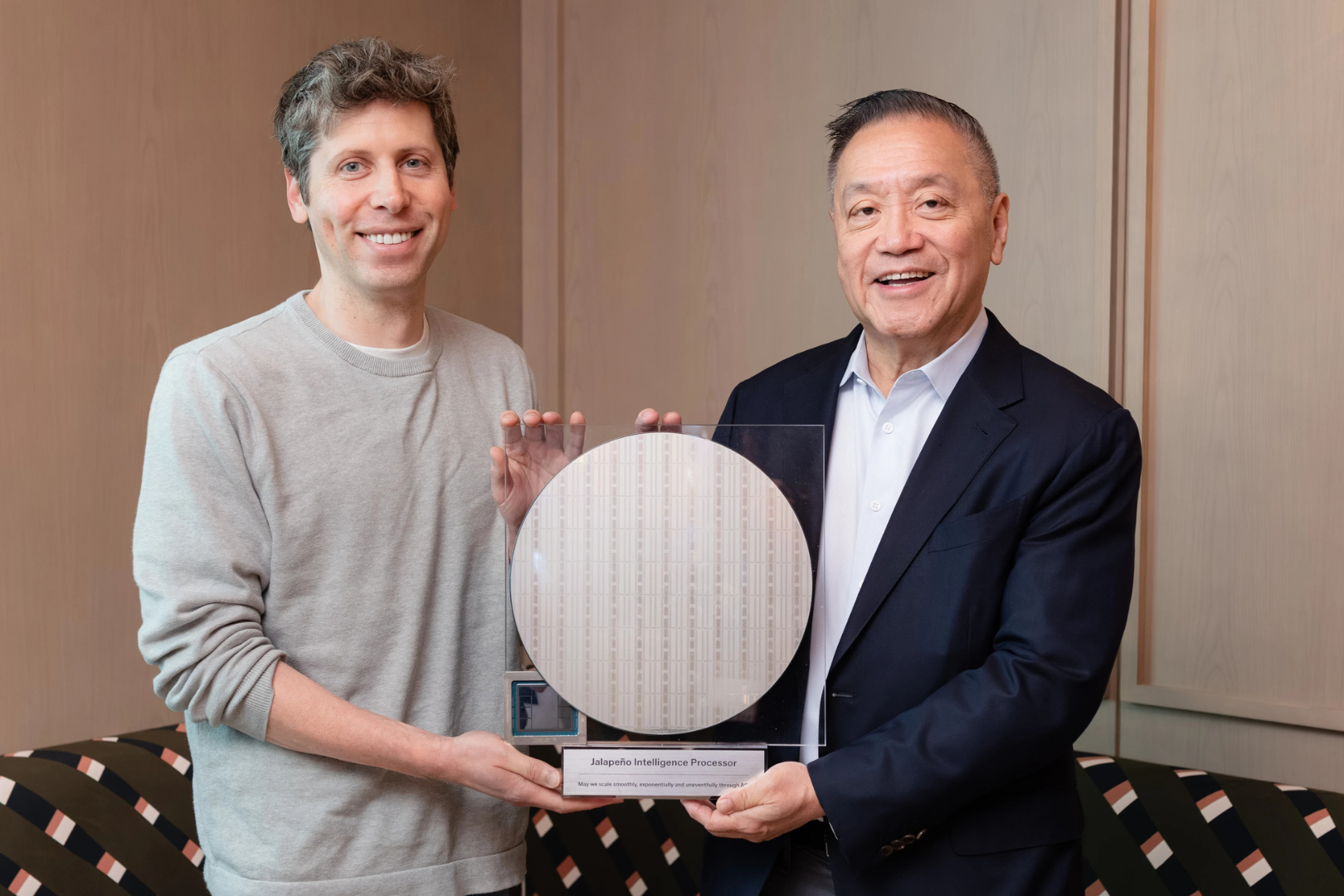
Figure: Broadcom leaders present the first Jalapeño inference chip to OpenAI executives at the June 2026 unveiling.
Key Specs & Facts
| Detail | Info |
|---|---|
| Chip Type | ASIC (Application-Specific Integrated Circuit) |
| Primary Function | AI Inference — powering ChatGPT responses |
| Co-designed With | Broadcom |
| Manufactured By | TSMC (Taiwan) |
| Server Systems | Built by Celestica (Canada) |
| Design Time | ~9 months, AI-assisted design process |
| First Test Model | GPT-5.3-Codex-Spark |
| Deployment Target | End of 2026, multi-generation roadmap ahead |
Why Jalapeño Is a Big Deal
Since OpenAI ignited the generative AI boom in 2022, it has been one of Nvidia's single largest GPU customers. But with ChatGPT now serving over 1 billion monthly users, demand for compute has exploded beyond what even Nvidia can supply fast enough.
Jalapeño is OpenAI's answer: a purpose-built ASIC chip that is:
- Less expensive than Nvidia GPUs
- Optimized specifically for LLM inference workloads
- Future-proof — designed to run all future iterations of OpenAI's LLMs
- Competitive with Nvidia's Blackwell chips and Google's TPUs, according to Broadcom CEO Hock Tan
"By designing more of the stack ourselves, we can serve more intelligence with greater efficiency and keep pushing advanced AI toward broader access." — Greg Brockman, President of OpenAI
"It will be performant on, we think, all kind of future iterations of LLMs." — Richard Ho, OpenAI Hardware Chief
The Broader Chip Strategy
Jalapeño is not OpenAI's only hardware bet. The company has been diversifying its silicon supply chain aggressively:
- Broadcom — Jalapeño ASIC (inference)
- Cerebras — targeting 750 tokens/second for GPT-5.6 Sol by July 2026
- AWS Trainium — via a $38 billion Amazon deal
- AMD — separate chip agreement signed
- Nvidia — still a primary GPU supplier
This multi-vendor strategy reduces dependency on any single supplier and gives OpenAI unprecedented control over its cost and performance roadmap.
GPT-5.6 — The Most Advanced AI Model Family Yet
What Is GPT-5.6?
Announced on June 26, 2026, GPT-5.6 is not a single model — it is a family of three tiered models, each with a distinct name representing its capability level:
| Model | Tier | Best For | Input Price | Output Price |
|---|---|---|---|---|
| GPT-5.6 Sol | Flagship | Complex reasoning, coding, biology, cybersecurity, agents | $5 / 1M tokens | $30 / 1M tokens |
| GPT-5.6 Terra | Balanced | Everyday production, high-volume tasks | $2.50 / 1M tokens | $15 / 1M tokens |
| GPT-5.6 Luna | Fast & Affordable | Latency-sensitive, budget workloads | $1 / 1M tokens | $6 / 1M tokens |
The number (5.6) marks the generation. The name marks the capability tier — a cleaner, more scalable naming convention than the old "Instant" system.
New Reasoning Modes: max and ultra
GPT-5.6 introduces two powerful new reasoning controls, exclusive to Sol:
maxreasoning effort — Gives Sol maximum time to deeply think through complex, multi-step problemsultramode — Instead of one model working alone,ultradeploys coordinated subagents that split and parallelize complex tasks, dramatically boosting accuracy
Think of it this way: max deepens a single chain of thought. ultra assembles a team of AI workers on one problem simultaneously.
Benchmark Performance
GPT-5.6 Sol sets new state-of-the-art results across multiple benchmarks:
Terminal-Bench 2.1 (command-line workflow automation):
| Model | Score |
|---|---|
| GPT-5.6 Sol (ultra) | 91.91% |
| GPT-5.6 Sol (max) | 88.76% |
| Claude Mythos 5 | 88.00% |
| GPT-5.5 | 83.40% |
Other Notable Results:
- Agent's Last Exam — Sol is the only model to surpass 50%, reaching 50.9% in code mode
- GeneBench v1 (genomics/biology) — Sol beats GPT-5.5 while using fewer tokens
- ExploitBench (cybersecurity) — Sol matches Claude Mythos Preview using only ⅓ of output tokens
Domain Strengths
Coding
Sol sets a new benchmark on Terminal-Bench 2.1, excelling at multi-step CLI automation, file editing, test running, and iterative tool coordination — making it ideal for autonomous coding agents.
Biology & Life Sciences
On GeneBench v1, Sol outperforms all previous models on long-horizon genomics and quantitative biology analysis, while being more token-efficient — critical for scientific research workflows.
Cybersecurity
OpenAI calls Sol its most capable cybersecurity model yet. Crucially, its safety guardrails are built directly into the core model behavior — not layered on top as a filter. This prevents the false-positive problem that plagued Anthropic's Claude Fable 5. Sol is hardened against adversarial attacks and optimized to favor defensive security work over offensive exploits.
Pricing & Prompt Caching
- Terra is ~2x cheaper than GPT-5.5 for comparable performance — a strong value proposition for production workloads
- New prompt caching features include explicit cache breakpoints, 30-minute minimum cache life, cache writes at 1.25x uncached rate, and a 90% discount on cache reads
- OpenAI plans to run Sol on Cerebras hardware targeting 750 tokens/second by July 2026
The Government Controversy
The GPT-5.6 launch came with unexpected political friction. The Trump administration requested OpenAI limit the rollout to a small group of trusted partners before broader release — a move that follows the government's earlier forced takedown of Anthropic's Claude Fable 5.
OpenAI complied, but pushed back publicly:
"We don't believe this kind of government access process should become the long-term default. It keeps the best tools from users, developers, enterprises, cyber defenders, and global partners who need them." — OpenAI Official Blog, June 26, 2026
Broader access via ChatGPT, Codex, and the API is expected within weeks. OpenAI is also working with the administration on a new executive order framework for cybersecurity AI and a "repeatable process for future model releases."
What's Next for OpenAI?
| Timeline | What to Expect |
|---|---|
| July 2026 | Sol running on Cerebras at 750 tokens/sec |
| Late 2026 | Jalapeño chip initial deployment begins |
| Coming Weeks | GPT-5.6 broader access on ChatGPT, Codex & API |
| Beyond 2026 | Multi-generation Jalapeño chip roadmap; further model tiers |
Conclusion
OpenAI's final week of June 2026 was nothing short of historic. With GPT-5.6 pushing the frontier of AI reasoning, coding, biology, and cybersecurity — and Jalapeño laying the foundation for OpenAI's own silicon empire — the company is executing on an audacious vision: to own the entire AI stack from chip to chatbot.
Whether you're a developer choosing between Sol, Terra, and Luna, an enterprise planning your AI infrastructure, or simply a curious observer watching the AI race unfold — one thing is clear: OpenAI is playing a very long game, and it's playing it on every front simultaneously.
Sources
- OpenAI Official: OpenAI × Broadcom Jalapeño Inference Chip
- CNBC: OpenAI and Broadcom reveal Jalapeño
- Reuters: OpenAI unveils custom chip designed with Broadcom
- TechCrunch: OpenAI limits GPT-5.6 rollout after government request
- MarkTechPost: OpenAI Previews GPT-5.6 With Sol, Terra, and Luna
- DataCamp: GPT-5.6 Sol, Terra, and Luna Breakdown
Stay in the loop
Keep up to date with the latest news and updates