Instinct AI Review (2026): Messaging-Native Personal Agent — What It Does and What’s at Stake
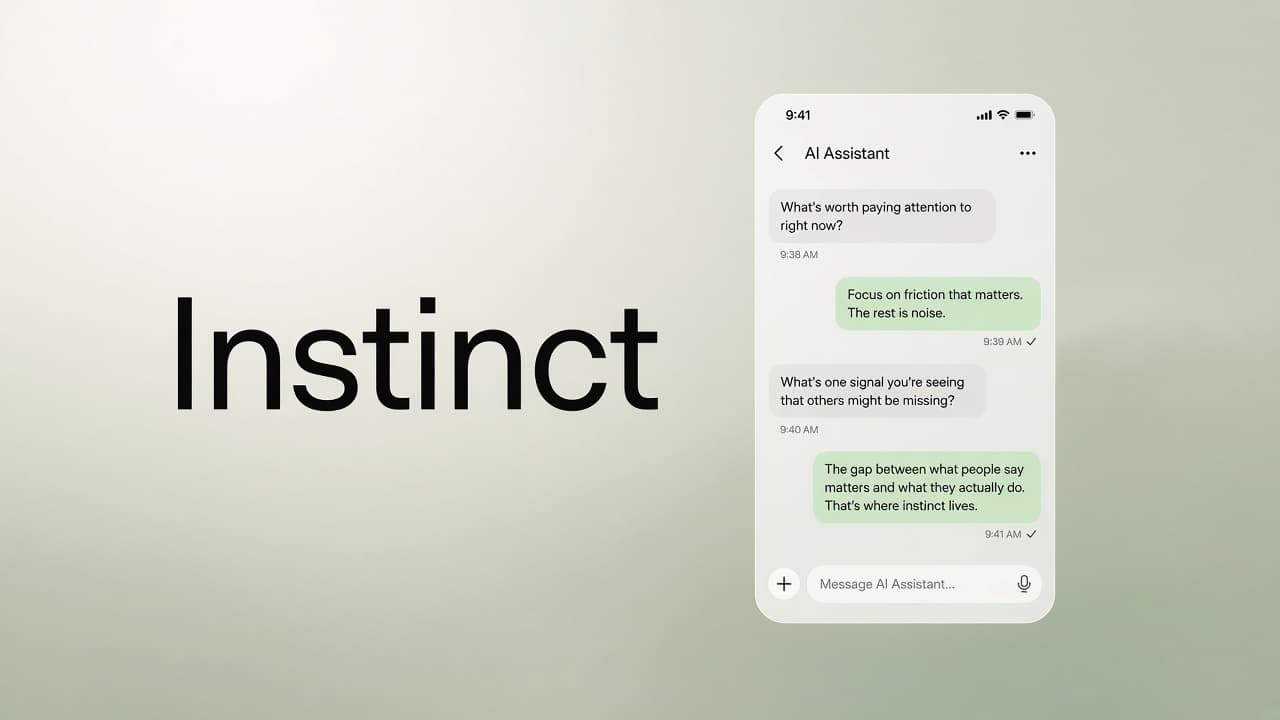
If you have been watching consumer AI agents this year, Instinct is hard to ignore. It is invite-only, lives inside the messaging apps people already open every day, and early users describe something rare: an assistant that does not stop at suggestions—it finishes the job.
This review consolidates public walkthroughs, early-user reporting, and Instinct’s own product framing into a practical picture of what the product is, where it shines, and what you should weigh before connecting an inbox or a payment method. One naming note up front: this is not AMD’s Instinct GPU line. Here, Instinct means the personal AI assistant from Spear Street Technology.
What Is Instinct AI?
Instinct is a personal AI assistant built by Spear Street Technology, Inc., a San Francisco company associated with founder Noah Shinn. The public pitch is blunt: there are no new interfaces. You text it or call it—through iMessage, WhatsApp, SMS, or a phone call—and it uses a phone and a computer the way a person would.
Access today is private. You join a waitlist at instinct.co or get invited by someone already inside while the company scales compute. There is no conventional App Store product to download; the conversation thread is the product.
How Instinct Works
Behind the casual chat sits a more aggressive architecture than most consumer chatbots. Instinct operates a persistent cloud computer with browser access and cached credentials for connected services. That machine keeps working between your messages, which is why multi-step life admin—research, email a vendor, wait for a reply, confirm a booking—can span hours without you babysitting every click.
Messaging-native interface
You meet Instinct in iMessage, WhatsApp, or a phone call. No new dashboard to learn—the continuous thread is the workspace.
Persistent cloud computer
A long-lived machine with a browser and stored logins keeps state between messages, so follow-ups and multi-day tasks stay alive.
Proactive outreach
The product is framed to nudge you: follow up on dropped threads, remind you about cutoffs, and sometimes initiate contact first.
Real-world authority
Terms describe Instinct as authorized to act on your behalf for commitments and transactions—which is exactly why access hygiene matters.
That combination—zero UI friction plus a worker that keeps going—is why people compare Instinct to more technical personal agents packaged for non-technical users. You are not configuring a local stack; you are handing a cloud operator your accounts and asking it to execute.
What Early Use Looks Like
Hands-on demos and early write-ups cluster around the same pattern: start with a bounded request, then widen the scope as trust and spend limits allow.
Bookings and errands
Salon appointments, restaurant holds, desk rentals, rides—tasks that normally mean tabs, emails, and waiting for confirmation.
Travel and paperwork
Visa-on-arrival flows, arrival cards, loyalty sign-ups, and pulling answers from receipts already sitting in email.
Memory across the thread
Details from earlier chats resurface later without being re-prompted—useful when a trip or project spans days.
Spend-limited cards
Giving the agent a virtual card with a hard limit shrinks blast radius when it pays for something on your behalf.
The ceiling is not infinite. Testers still hit walls when a flow demands a phone-native app, a brittle checkout page, CAPTCHAs, or two-factor friction the agent cannot clear cleanly. Instinct can feel magical on web-and-email admin and merely stuck when the real world refuses automation.
Pros and Cons
| Strengths | Trade-offs | |
|---|---|---|
| Experience | Text/call UX with almost no onboarding | Invite-only; you may wait |
| Capability | Finishes multi-step life admin, not just advice | Browser and app walls still break flows |
| Continuity | Persistent machine + memory across days | One crowded thread can get noisy |
| Autonomy | Proactive nudges and follow-through | Unauthorized or surprising actions have been reported |
| Access model | Connects email, calendar, devices, payments | Broad data collection and heavy terms |
| Economics | Free during private access | No published pricing; business model still opaque |
Privacy, Security, and Access
This is the section that should slow you down—even if the demos impress you.
Public reporting has documented cases where users believed disconnecting Google access would stop inbox use, only to find summaries or retained message content afterward. Security-minded testers have also shown that email can be a vector for prompt injection: malicious instructions in a message the agent reads. Instinct’s own legal language is unusually frank about failure modes such as unintended communications, payments, and hidden instructions designed to manipulate agents.
Training and licenses
Terms discussed in coverage grant broad rights over user materials, including for model training, with opt-out paths that are go-forward and incomplete for past training.
Disconnect is not deletion
Indexed content from connected services may persist after you unlink an account unless you follow deletion flows carefully.
Blast-radius hygiene
Use a spend-capped card, avoid wiring work email or highly sensitive accounts, and read Vault / training settings before you go wide.
None of this makes the product “fake.” It makes the product powerful in the exact way that raises stakes. If your bar for an assistant is “never see my primary inbox,” Instinct in its current form is probably the wrong experiment.
Who Instinct Is For
Curious early adopters
You want the frontier of consumer agents and can isolate the trial from your most sensitive accounts.
Life-admin overloaded
Appointments, reservations, bills, and vendor coordination are piling up—and you want them handled, not summarized.
Text-native users
You already live in iMessage or WhatsApp and refuse to learn another agent console.
Privacy-first users
Retention incidents, injection tests, and perpetual training licenses are a poor fit for a privacy-maximal posture.
Work / confidential data
Employer or client material inside a broad agent license is a bad combination—even enthusiasts recommend low-risk accounts.
Need-it-this-week buyers
Private access means you may not get in when you need the help.
Verdict
Instinct is one of the clearest signals yet that consumer personal agents are shifting from chatbots that advise to operators that act. The messaging-native surface is the right product bet for mass adoption; the persistent cloud computer is why the demos look unfairly good; and the privacy record is why thoughtful people should still hesitate.
If you get an invite, treat it like a powerful intern with root-ish access: start narrow, cap spend, separate identities, and read the settings before you connect everything. The product is real. The trade-off is, too.