The Next Evolution in AI Agents: Why QM YC Agent System Surpasses OpenClaw and Hermes
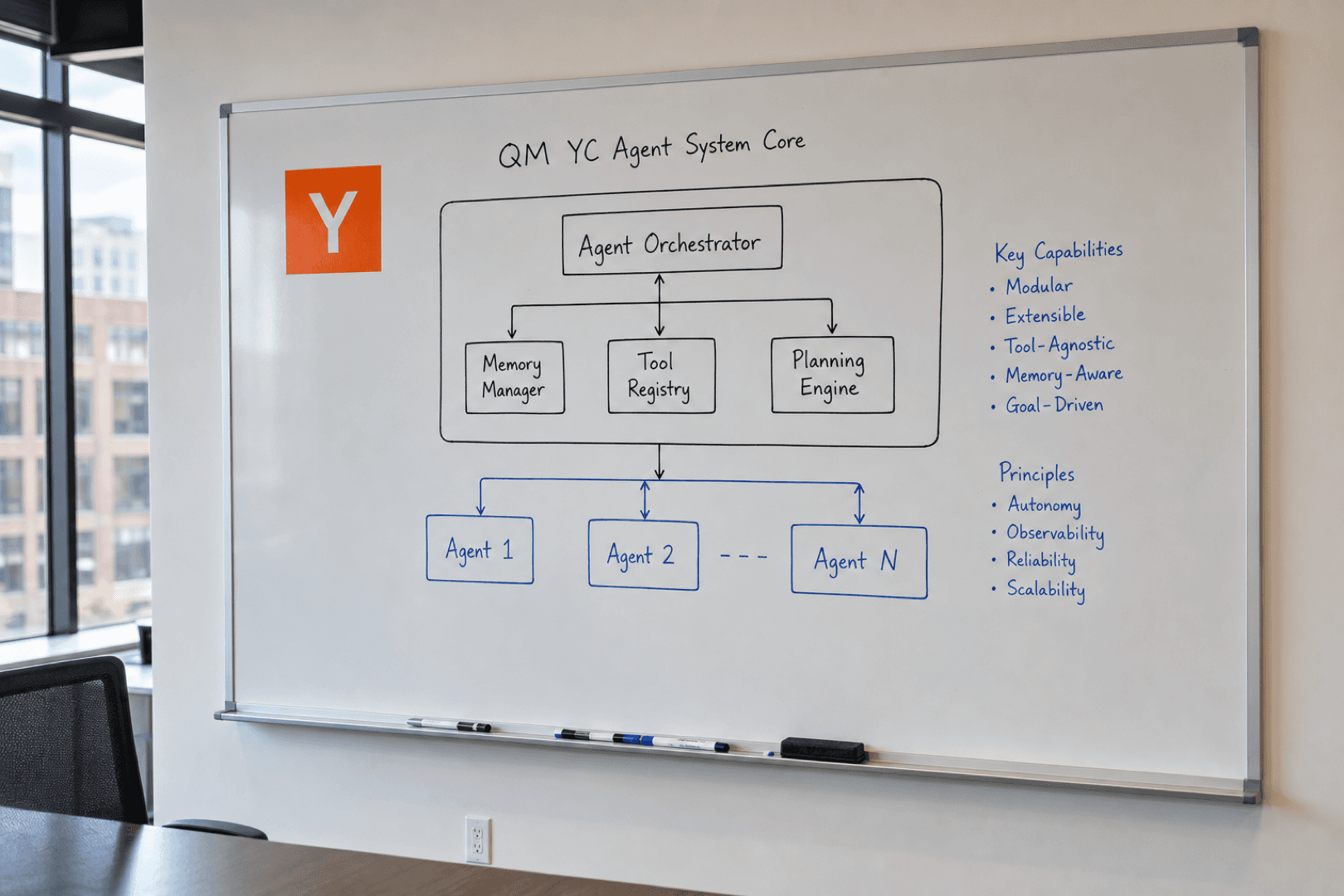
In the rapidly evolving landscape of artificial intelligence, we're witnessing a paradigm shift from simple chatbots to sophisticated autonomous agents. While systems like OpenClaw and Hermes laid important groundwork, the QM YC Agent System represents a quantum leap forward in agent architecture, offering capabilities that redefine what's possible in AI automation. The open-source project is public at yc-software/qm—and it is already one of the fastest-rising agent repos on GitHub, climbing past 10.9k stars in about six days after launching on July 29, 2026.
What Makes QM YC Revolutionary
Four capabilities that separate QM YC from earlier agent stacks.
Multi-Agent Orchestration
Specialized agents collaborate with context-aware delegation.
- Dynamic task decomposition
- Agent specialization
- Realtime coordination
- Fault-tolerant messaging
Hierarchical Memory
Multi-layer memory beyond linear OpenClaw / Hermes models.
- Short-term working memory
- Episodic task history
- Semantic domain knowledge
- Procedural skills
Adaptive Tooling
Context-aware tool use with chaining and recovery.
- Adaptive tool selection
- Multi-step tool chaining
- NL custom tool creation
- Automatic fallbacks
Planning & Reasoning
Structured planning plus decision optimization.
- Hierarchical Task Networks
- Monte Carlo Tree Search
- Causal reasoning
- Meta-learning adaptation
QM vs OpenClaw vs Hermes
How that stack compares to OpenClaw and Hermes at a glance.
OpenClaw
Foundation
- Single-agent only
- Limited memory persistence
- Basic tool calling
- Reactive behavior
Hermes
Improvement
- Better function accuracy
- Improved context handling
- More reliable tools
QM YC
Evolution
- 10x faster via parallel agents
- 95%+ complex-task success
- Self-improvement via RL
- Enterprise-grade reliability
- Extensible agent architecture
Real-World Applications
Where these advantages show up in practice.
Business Automation
- Context-aware customer service
- Document processing & analysis
- Cross-system workflow orchestration
Development & DevOps
- Autonomous code review
- Intelligent CI/CD management
- Automated test & deploy
Research & Analysis
- Multi-source data synthesis
- Automated literature review
- Hypothesis generation & testing
Personal Productivity
- Priority-aware task management
- Automated research & summaries
- Context-aware scheduling
Technical Architecture Highlights
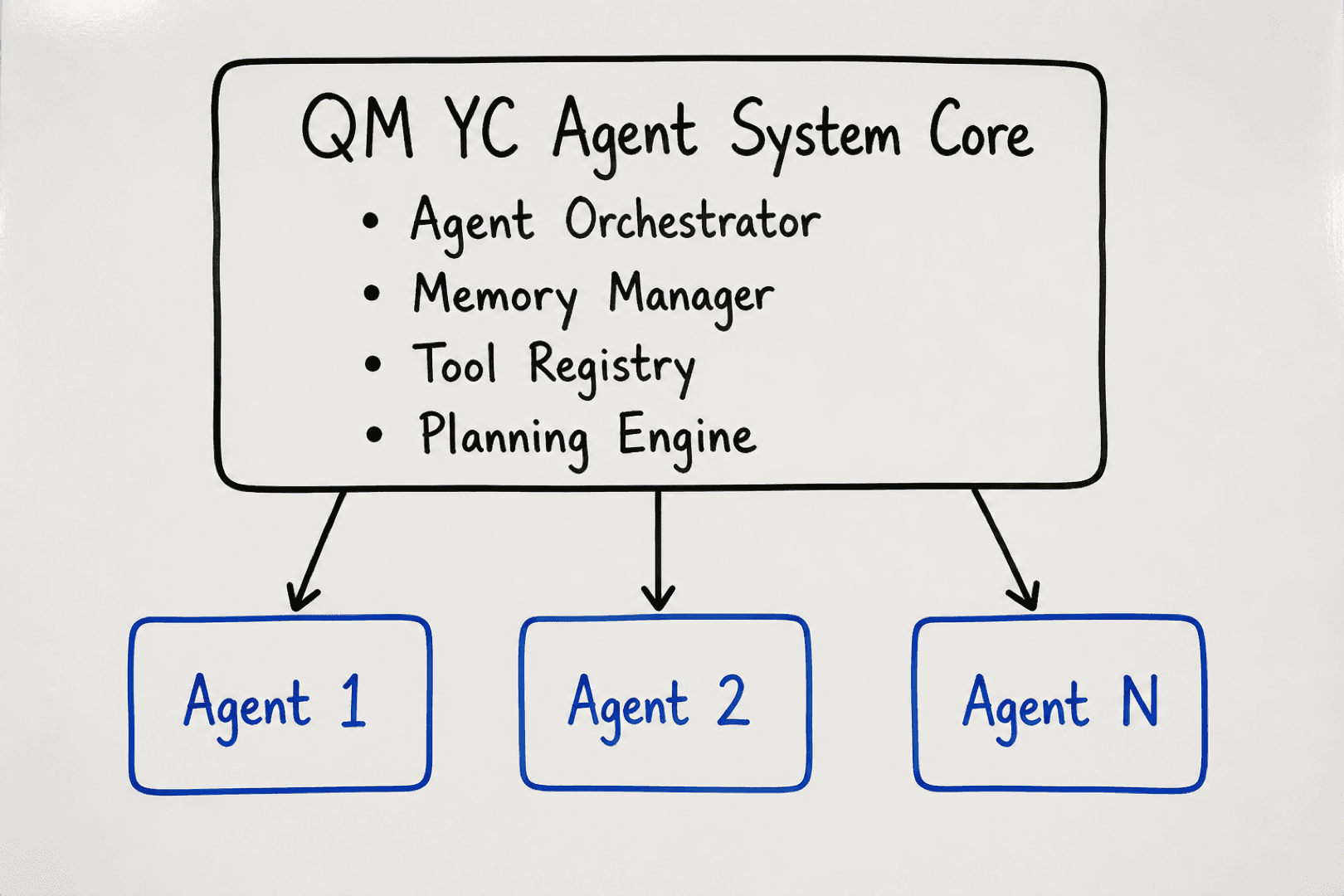
A modular core that fans out work across specialized agents.
Scalability
- Horizontal scaling via agent distribution
- Efficient resource allocation
- Load balancing across agent pools
Security & Privacy
- Sandboxed tool execution
- Role-based access control
- Audit logging for all agent actions
- Encryption at rest and in transit
Getting Started with QM YC
Built for developers and business users.
For Developers
- Comprehensive API documentation
- SDK support for major languages
- Custom agent templates
- Integration examples
For Business Users
- No-code agent configuration
- Pre-built agent templates
- Visual workflow designer
- Analytics dashboard
The Future of AI Agents
QM YC Agent System represents more than just an incremental improvement—it's a fundamental reimagining of what AI agents can accomplish. By combining multi-agent collaboration, advanced memory systems, intelligent planning, and robust tool integration, it sets a new standard for autonomous AI systems.
As we move toward an AI-augmented future, systems like QM YC will become essential infrastructure for businesses, developers, and individuals seeking to harness the full potential of artificial intelligence.
Conclusion
While OpenClaw and Hermes were important stepping stones, the QM YC Agent System delivers the complete package: reliability, scalability, intelligence, and ease of use. Whether you're building enterprise automation, developing AI-powered applications, or exploring the frontiers of autonomous agents, QM YC provides the foundation you need.
The question isn't whether to adopt advanced agent systems—it's whether you can afford not to.