Strix: The Revolutionary AI-Powered Penetration Testing Agent Transforming Cybersecurity in 2026
TL;DR: Strix is an open-source autonomous AI penetration testing framework that deploys multi-agent hackers to discover, validate, and prove vulnerabilities through real proof-of-concepts — delivering pentest results in hours instead of weeks, with seamless CI/CD integration and support for GPT-5 or Claude Sonnet 4.5.
What is Strix?
Strix is an open-source autonomous AI penetration testing framework that's revolutionizing how developers and security teams approach application security. Unlike traditional static analysis tools, Strix deploys AI agents that behave like real hackers — dynamically executing code, discovering vulnerabilities, and validating them through actual proof-of-concepts (PoCs). Built on cutting-edge large language model technology, Strix can be configured to work with OpenAI's GPT-5 or Anthropic's Claude Sonnet 4.5 for optimal performance.
The platform offers a developer-first command-line interface that can scan local codebases, GitHub repositories, or live web applications with a single command. What sets Strix apart is its ability to eliminate false positives by actually validating vulnerabilities rather than just flagging potential issues.
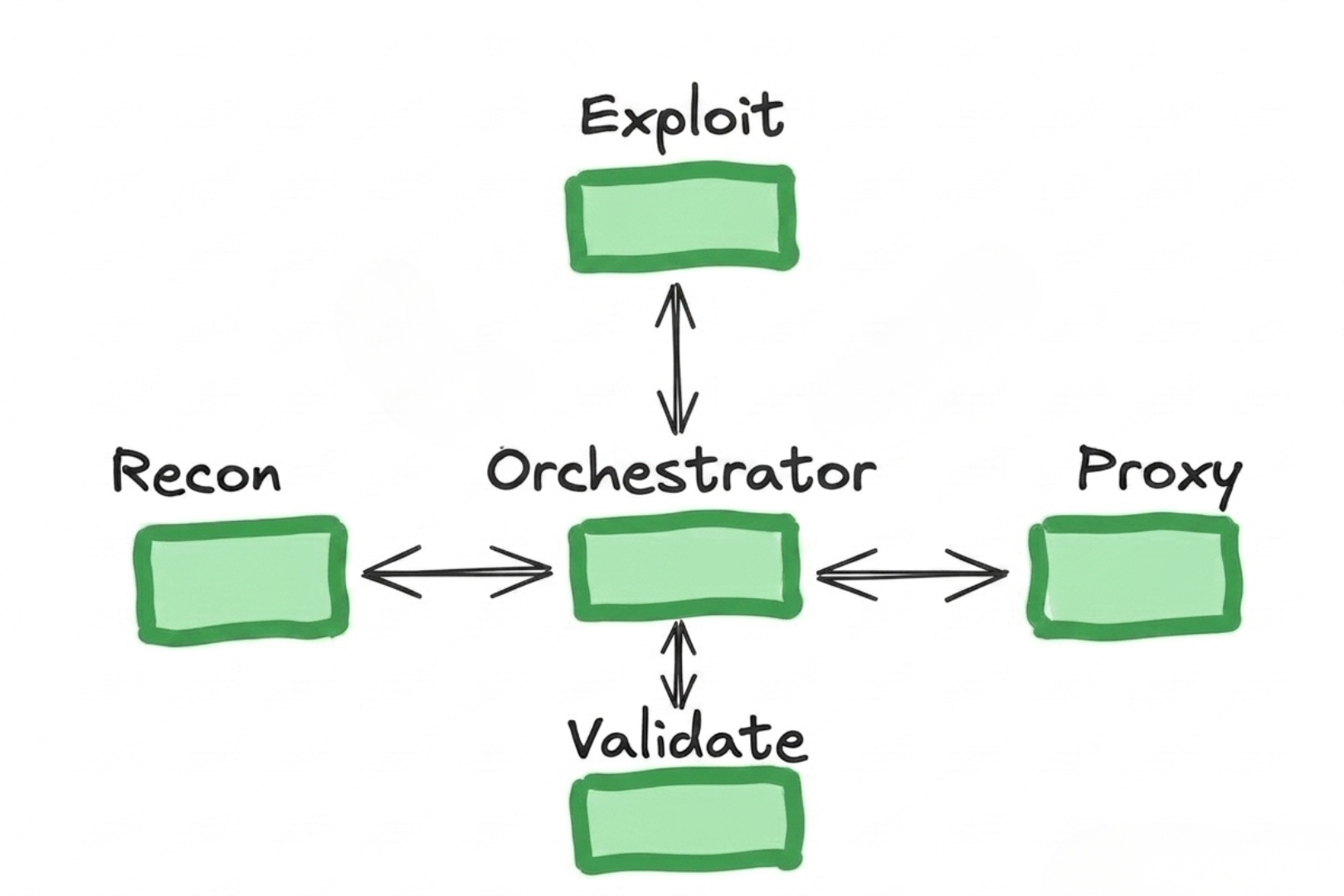
Figure: Strix deploys specialized AI agents that collaborate in parallel to discover and validate vulnerabilities across multiple attack vectors.
What Makes Strix Special?
Autonomous Multi-Agent Architecture
Strix employs teams of specialized AI agents that collaborate and scale to provide comprehensive security coverage. These agents work in parallel, sharing discoveries and coordinating attacks across different vectors. This distributed workflow approach enables faster, more thorough testing than traditional manual penetration testing methods.
Complete Hacker Toolkit Out of the Box
Each Strix agent comes equipped with professional-grade security testing tools including:
- Full HTTP proxy for request/response manipulation
- Browser automation for testing XSS, CSRF, and authentication flows
- Interactive terminal environments for command execution
- Python runtime for custom exploit development
- Automated OSINT and attack surface mapping capabilities
Real Validation, Not False Positives
The most significant advantage of Strix is its ability to validate vulnerabilities through actual proof-of-concepts. Rather than generating lengthy reports filled with theoretical vulnerabilities, Strix confirms each finding by demonstrating exploitability. This dramatically reduces the time security teams spend triaging false positives.
Seamless CI/CD Integration
Strix now integrates directly with GitHub Actions and CI/CD pipelines, allowing teams to automatically scan for vulnerabilities on every pull request and block insecure code before it reaches production. The non-interactive mode makes it perfect for automated workflows, exiting with non-zero codes when vulnerabilities are detected.
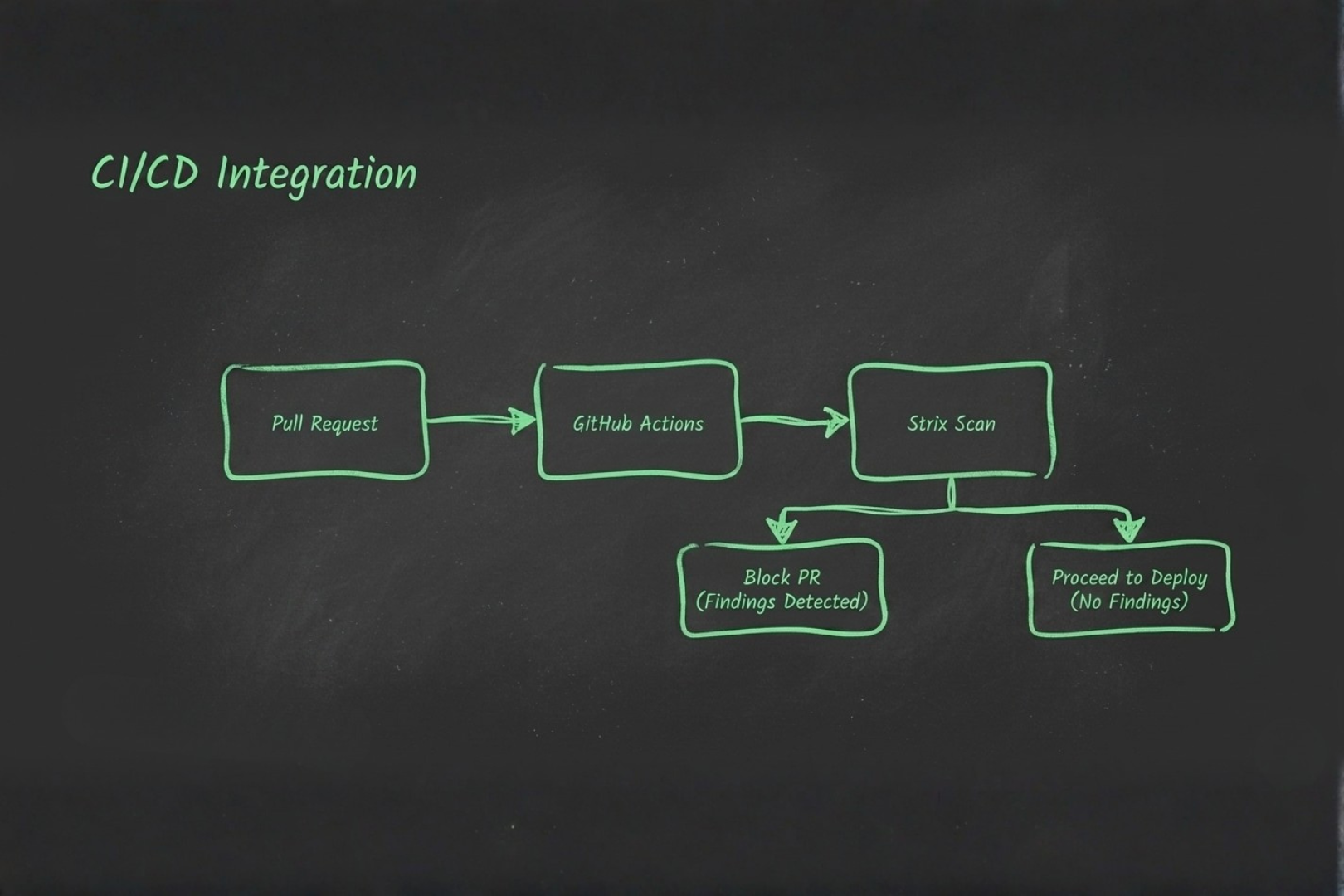
Figure: Strix integrates with GitHub Actions to scan every pull request and block insecure code before production.
Comprehensive Vulnerability Coverage
Strix can identify and validate a wide range of security issues including:
- Access control flaws (IDOR, privilege escalation, auth bypass)
- Injection attacks (SQL, NoSQL, command injection)
- Server-side vulnerabilities (SSRF, XXE, deserialization)
- Client-side issues (XSS, prototype pollution, DOM vulnerabilities)
- Business logic flaws and race conditions
- Authentication vulnerabilities and session management issues
Why Strix is Becoming Popular in 2026
Addressing the Security Testing Gap
As software development accelerates, traditional penetration testing struggles to keep pace. Manual pentests take weeks and are expensive, while static analysis tools generate too many false positives. Strix bridges this gap by delivering penetration test results in hours rather than weeks, at a fraction of the cost.
Recognition in the Security Community
Strix has been featured in multiple "top AI security tools" lists for 2026, with security experts praising its autonomous agent framework that simulates human attacker behavior. The project has gained significant traction on GitHub and has been included in curated collections of AI security tools.
Developer-Friendly Approach
Unlike enterprise security tools that require extensive training, Strix can be installed and running in minutes with a simple pipx install strix-agent command. This accessibility has made it popular among development teams who want to shift security left without adding complexity to their workflows.
Cloud and Self-Hosted Flexibility
Teams can choose between self-hosting Strix with their own LLM API keys or using the hosted cloud version at app.usestrix.com, which eliminates setup complexity and provides additional features like shareable dashboards and continuous monitoring.
Active Community and Open Source
As an open-source project, Strix benefits from community contributions and transparency. The project welcomes contributions of code, documentation, and new prompt modules, fostering a collaborative ecosystem around AI-powered security testing.
Real-World Impact
Companies like Chegg have already adopted Strix, with testimonials praising it as "a game-changer for our security toolbox" that enables continuous external testing year-round. The platform's ability to automate bug bounty research and generate PoCs has also made it valuable for security researchers.
The Future of Security Testing
Strix represents a paradigm shift in how we approach application security — from periodic manual assessments to continuous, automated, AI-powered validation. As the platform continues to evolve and integrate deeper into development workflows, it's positioning itself as an essential tool for any organization serious about securing their applications in the AI era.