01
Scalability
Easily scale your infrastructure up or down based on demand without overprovisioning.
- Right-sized capacity
- Elastic workloads
- Growth-ready foundations


Hong Kong / Cloud infrastructure + modernization
Kubernetes (K8s) infrastructure and cloud architecture across major providers—AWS, Microsoft Azure, and Google Cloud—or hybrid and on-premise. Scalable, secure deployment. Get a free technical consultation.
Infrastructure with a reason
A well-designed cloud architecture allows businesses to leverage flexible infrastructure on leading platforms (AWS, Azure, Google Cloud), enhance collaboration, and ensure business continuity in a rapidly changing digital landscape.
Scale, secure, and recover
Easily scale your infrastructure up or down based on demand without overprovisioning.
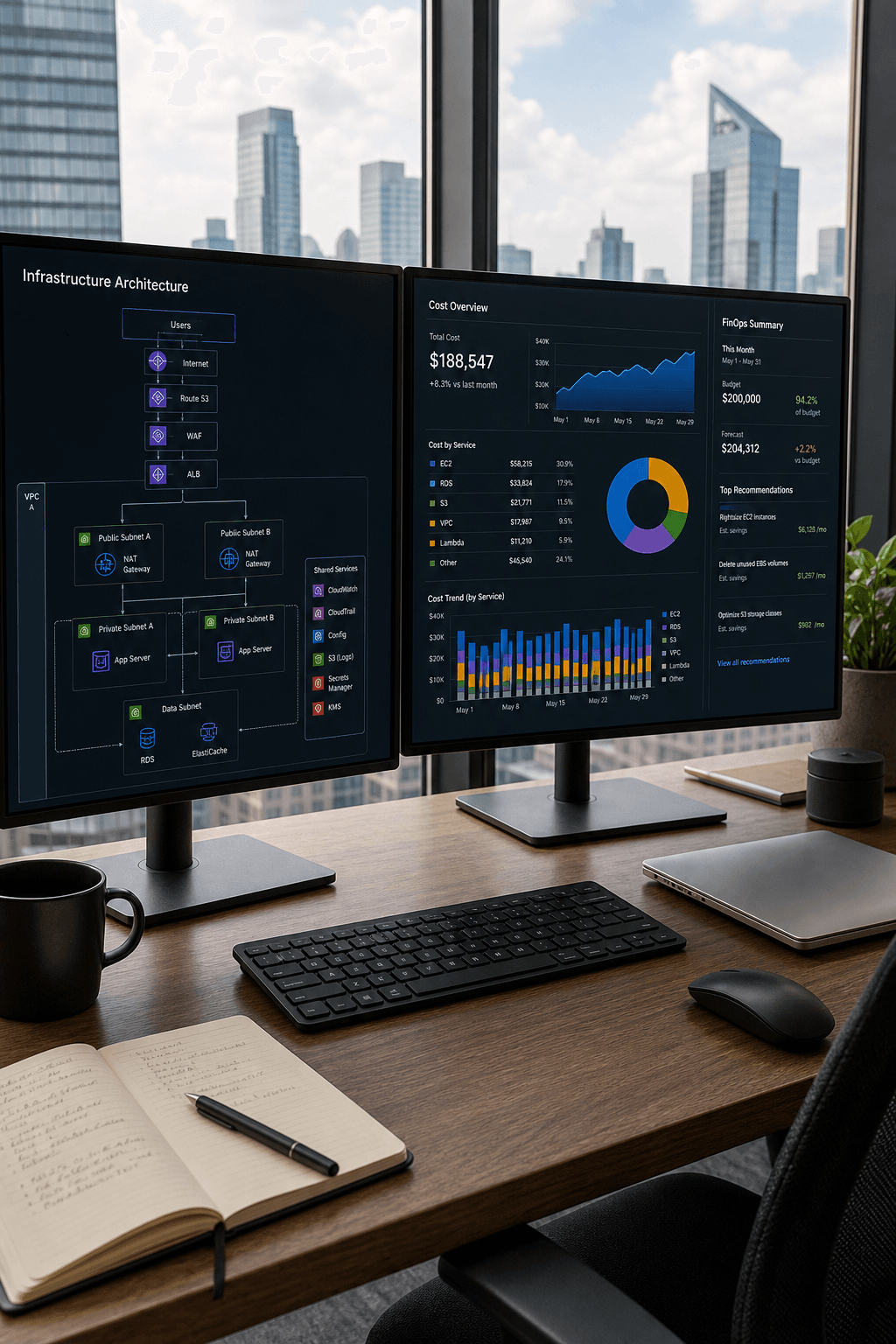
Optimize costs by paying only for the resources you use and reducing capital expenditure.
Implement robust security measures and meet industry compliance standards with cloud-native tools.
Ensure business continuity with reliable backup and disaster recovery strategies.
Accelerate application deployment and updates with automated cloud services.

Designed for resilience
Design applications as a collection of loosely coupled services for better maintainability and scalability.
Run code without provisioning or managing servers, reducing operational overhead.
Design and run workloads on AWS, Microsoft Azure, and Google Cloud—mix providers where it makes sense to reduce lock-in and improve resilience.
Kubernetes infrastructure for a product team
Scale and reliability issues in legacy hosting became a focused Kubernetes cluster design, CI/CD, and monitoring engagement—with stable deployments, 99.9% uptime, and faster releases.
Explore related case studies
Migration with ownership
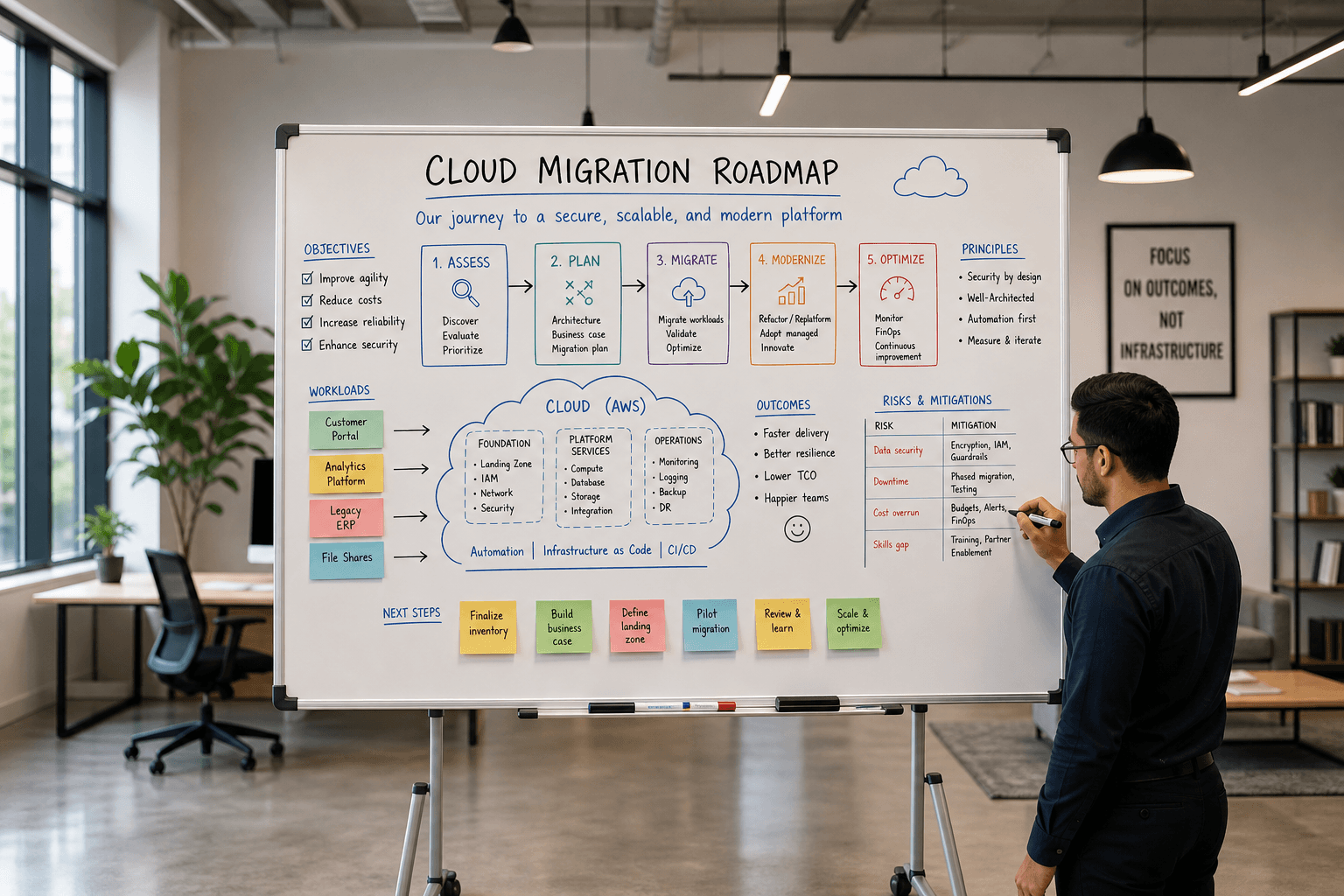
We guide planning, migration, integration, and optimization across AWS, Microsoft Azure, Google Cloud, hybrid, and on-premise environments—balancing security, cost, compliance, and the teams who will run the system.
Use the FAQ below to understand the architecture, deployment, and delivery questions before a technical consultation.
Clarity before implementation
Understand the trade-offs before you modernize.
Our cloud architecture solutions are tailored to your business needs, ensuring seamless migration, integration, and optimization. We guide you through every step from planning to deployment. Ready to modernize your IT infrastructure? Contact us today to learn how our cloud architecture solutions can transform your business.